Who Are the Circassian People?
One of the oldest cultures in Europe that most people have never heard of. Here is their story.
Most people go their whole lives without hearing the word "Circassian." But behind that word is one of the oldest living cultures in Europe, a global diaspora spread across dozens of countries, and a language that linguists call one of the most unique on the planet.
So who are the Circassian people, and why does their story matter?
Origins in the Caucasus
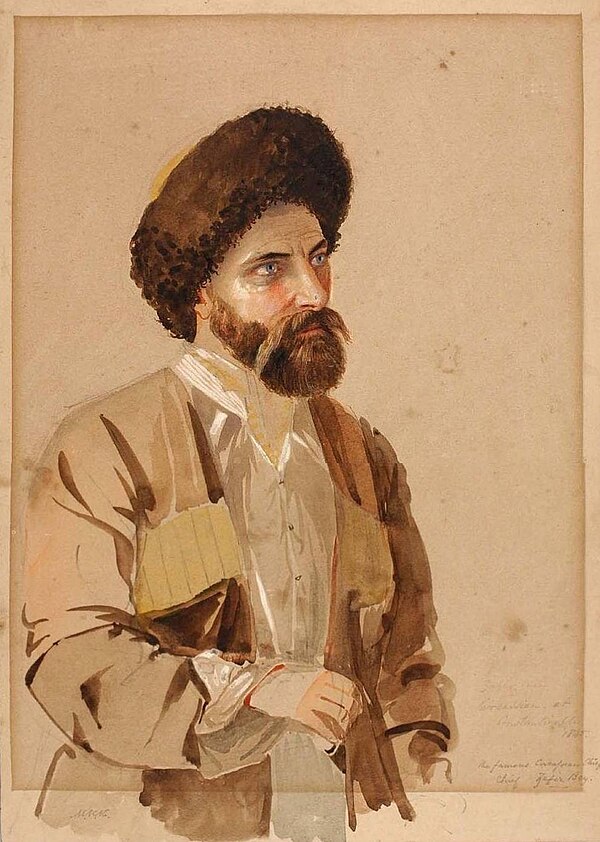
The Circassians, also known as the Adyghe (Адыгэ), are indigenous to the Northwest Caucasus, the mountainous region between the Black Sea and the Caspian Sea. This is the land that originally gave the word "Caucasian" its meaning. The Adyghe people have lived there for thousands of years, long before most modern nations existed.
The Circassian homeland covers parts of what is now the Russian republics of Adygea, Kabardino-Balkaria, and Karachay-Cherkessia. Whether someone identifies as Kabardian, Shapsug, Abzakh, or any other subgroup, they are all Adyghe. The term "Circassian" is the English-language name for this broader Adyghe nation.
The Circassian Diaspora
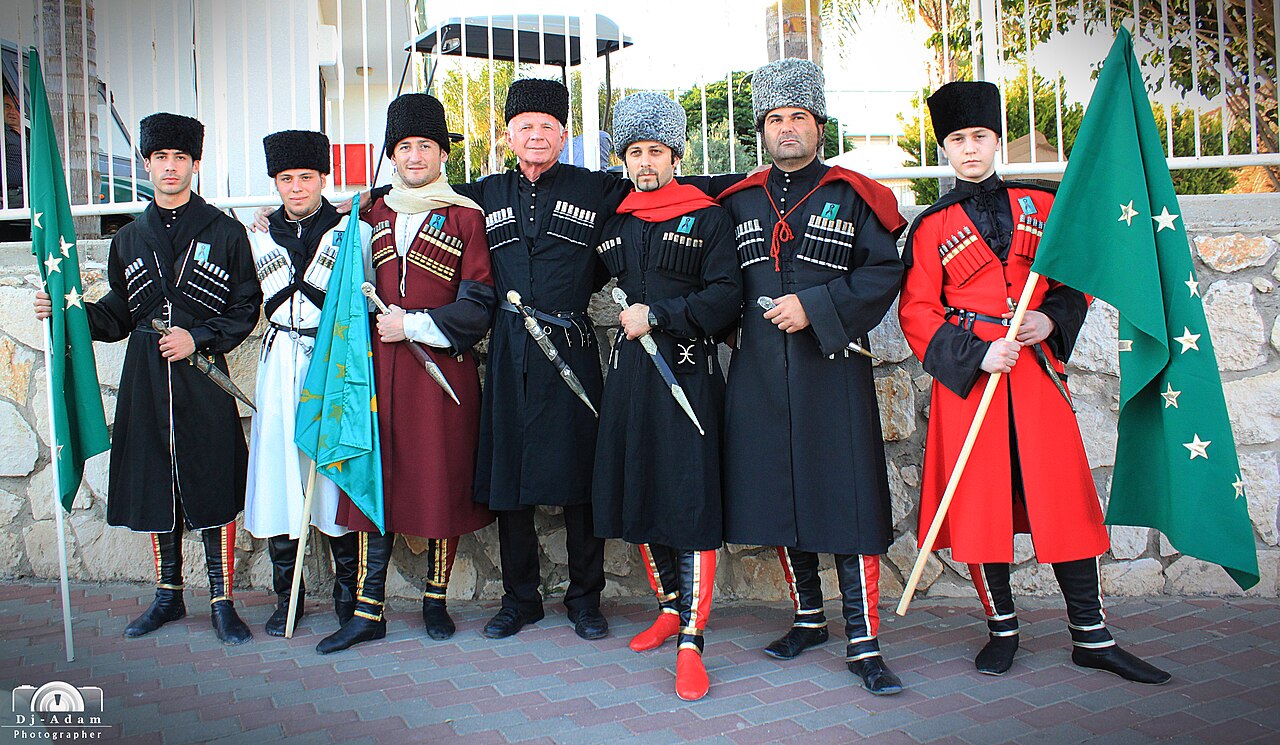
Today, the majority of Circassian people actually live outside the Caucasus. The Circassian diaspora spans Turkey, Jordan, Syria, Israel, Germany, the United States, and many more countries.
Turkey has the largest Circassian population outside of Russia. Many Adyghe families there have kept their traditions alive for generations, even while integrating into Turkish society. The same is true for communities in Amman, Jordan, where Circassians have played a notable role in the country's history since the 19th century. Across the diaspora, Circassian cultural associations work to keep the language, dance, and Habze traditions alive.
Habze: The Circassian Way of Life
If there is one thing that defines Circassian identity beyond blood and land, it is Habze. This is the traditional code of ethics and conduct that has guided Circassian life for centuries. It covers everything from how to treat guests to how to carry yourself in public.
"A guest is a messenger from God."
Hospitality is central. In Circassian culture, a guest is sacred. Historically, a Circassian household would give up their own bed for a guest and stand guard outside while they slept. That level of respect for visitors is baked into the culture and still practiced today.
Respect for elders is another pillar. When an older person enters the room, everyone stands. Younger people do not sit down before their elders, and they do not speak over them. This is not just a formality. People actually live this way.
Habze also governs humility, self-discipline, and how men and women interact. It is less of a rulebook and more of a worldview. For many Circassians today, learning Habze is just as important as learning the language itself.
The Circassian Language and Alphabet
The Circassian language is one of the most unique in the world. It belongs to the Northwest Caucasian language family, which is not related to any other known language family on earth. Linguists study it endlessly. The Circassian alphabet contains around 60 letters, and the language includes sounds that most non-native speakers struggle with for years.
There are two main dialects: Kabardian (East Circassian, also called Kabardino-Circassian) and Adyghe (West Circassian). Kabardian is the more widely spoken dialect, with the largest number of speakers in Kabardino-Balkaria and across the diaspora in Turkey and the Middle East. The two dialects are closely related but different enough that speakers sometimes have trouble fully understanding each other.
The hard truth: the Circassian language is at risk. UNESCO has classified both Kabardian and Adyghe as vulnerable. In diaspora communities, younger generations often grow up speaking Turkish, Arabic, or English at home instead of their ancestral Adyghe language. Every year, the number of fluent speakers gets smaller.
But there is a growing movement to change that. Online communities, language courses, and apps are making it easier than ever to start learning Circassian. The interest is real. People across the Adyghe diaspora want to reconnect with their roots and pass the language on to the next generation.
Circassian Culture and Traditions
The warrior tradition. Circassians were known throughout history as some of the fiercest warriors in the Caucasus. Their cavalry techniques and fighting skills were respected by neighboring empires for centuries. The Adyghe warrior ethos is a core part of Circassian identity to this day.
The dance. Circassian dance is sharp, precise, and elegant. The men move with controlled power while the women glide like they are barely touching the ground. It is a centerpiece of weddings, festivals, and cultural events across the diaspora.
The flag. The Circassian flag (green with gold stars and arrows) is one of the most recognized symbols among the diaspora. It shows up at weddings, cultural events, and hanging in living rooms from Amman to New Jersey.
The food. Circassian cuisine does not get nearly enough credit. Thick walnut sauces, lamb dishes, cheese-filled breads, and traditional Adyghe pasta are staples. If you have ever had Circassian chicken at a Turkish restaurant, that is only the beginning.
Circassian beauty. Throughout history, Circassian people have been noted for their striking appearance. References to Circassian beauty appear in literature, art, and historical accounts dating back centuries. The term "Caucasian" as a racial category was literally coined because of the perceived beauty of the people from the Caucasus. While modern Circassians have a nuanced view of this legacy (much of which is tied to the Ottoman slave trade), the historical fascination is well documented.
The Nart Sagas. The Narts are the ancient mythological heroes of the Circassian people. These epic stories, shared in different versions with other North Caucasus peoples, feature legendary characters like the wise woman Seteney, the clever warrior Sosruko (born from stone), the smith-god Tlepsh, and the musician Ashemez. The Nart sagas were transmitted orally through song and storytelling for centuries and contain deep cultural values, cosmological beliefs, and historical memories. Many common Circassian names derive from Nart characters.
Historical impact. The Circassian people have had an outsized influence on world history. Circassian Mamluks ruled Egypt for 135 years (1382-1517), building some of Cairo's most magnificent architecture. Kabardian princes formed alliances with Russian tsars. Circassian soldiers served in elite units across the Ottoman Empire. Today, Circassians serve in Jordan's Royal Guard and hold prominent positions in politics, business, and culture across the diaspora.
Why It Matters Now
Circassian identity is at a turning point. The generation that grew up speaking the language fluently is getting older. The diaspora is spread across dozens of countries. And for many young Circassians, the connection to their heritage comes through social media, community events, and a growing desire to learn what their grandparents knew.
That is exactly why preserving and teaching the language matters so much right now. It is not just about words and grammar. It is about keeping an entire culture alive for the next generation.
Start Learning Circassian
2,000+ words, native speaker audio, Habze culture lessons, and a full alphabet course. Available in English, Russian, and Turkish.
Get the App