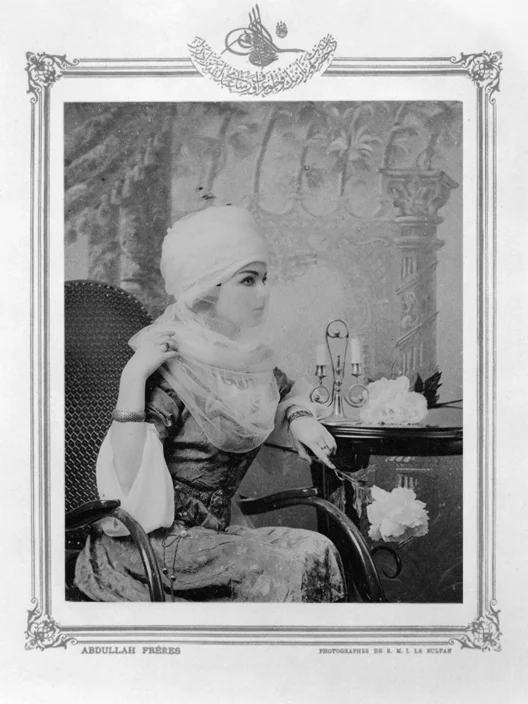
“Circassian beauty” is a centuries-old stereotype. Writers in Europe, the Middle East and America described Circassian women, and less often men, as unusually beautiful. The reputation goes back to the Late Middle Ages, grew in the Ottoman world and became a fixture of Western poetry, painting and even advertising from the 18th century on. Much of it is tied to the slave trade, which is why it is a complicated legacy for the Circassian people.
Historical references
The idea is old. Italian traders from Genoa sailed to the Circassian coast in the Late Middle Ages, and the reputation of Circassian women was already established then. Folk songs across the Middle East and the Balkans speak of their beauty, and a smaller set of writings says the same of Circassian men.
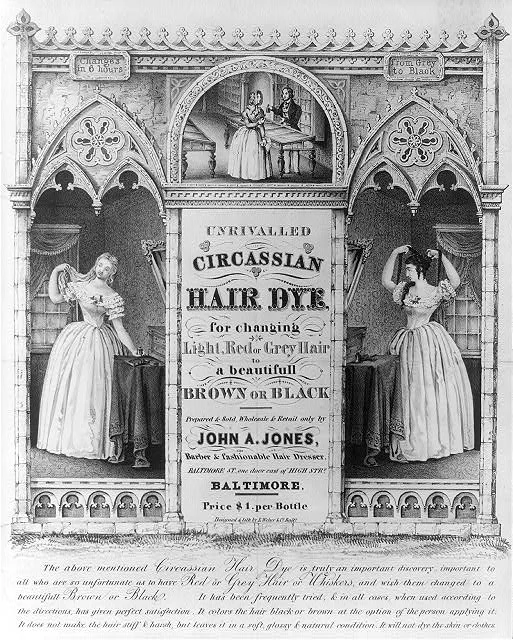
In the 18th century the phrase entered Western literature. In 1734 Voltaire, in his Letters on the English (Letter XI, “On Inoculation”), wrote about Circassian women and their beauty. Henry Fielding’s Tom Jones (1749) speaks of “the brightest Circassian beauty”. Lord Byron’s Don Juan (1818–1824) tells of a slave auction where a Circassian girl is sold. Poets and painters in Europe and North America made the “Circassian beauty” an ideal of feminine beauty.
The word even reached science. When the German scholars Christoph Meiners (1785) and Johann Friedrich Blumenbach (1795) used “Caucasian” as the name of a racial category, Europeans already reputed the Circassians and the Georgians, both peoples of the Caucasus, to be the most beautiful people in the world.
The Ottoman connection
The Ottoman world did more than anyone to spread the reputation. Many consorts and mothers of Ottoman sultans were Circassian, among them Mahidevran, Şevkefza Sultan and Rahime Perestu Sultan, and Circassian women also lived in the Safavid and Qajar courts of Iran. Many of them came as slaves, and in the West the Circassian woman of the harem became a stock figure of Orientalist art.
Much of the “Circassian beauty” story was written by people who bought and sold Circassian women. That is why the compliment sits uneasily with many Circassians today.
Barnum’s “Circassian beauties”
In the 1860s the American showman P. T. Barnum exhibited women he claimed were Circassian beauties. They wore their hair in a huge curly style that had no precedent in any earlier picture of Circassian women, and other performers soon copied it. The “Circassian beauty” became a fixture of American sideshows until the late 19th century: an invention of show business, not a portrait of a people.
The Habze standard of beauty
Inside Circassian culture, how people carried themselves counted as much as how they looked. Habze, the Circassian code of conduct, prizes clear and kind speech and frowns on chatter, sarcasm and boasting, even about one’s own bravery. Its ideal is Adyghaghe, “Circassianness”: dignity, restraint and respect. More in Habze, the Circassian code.
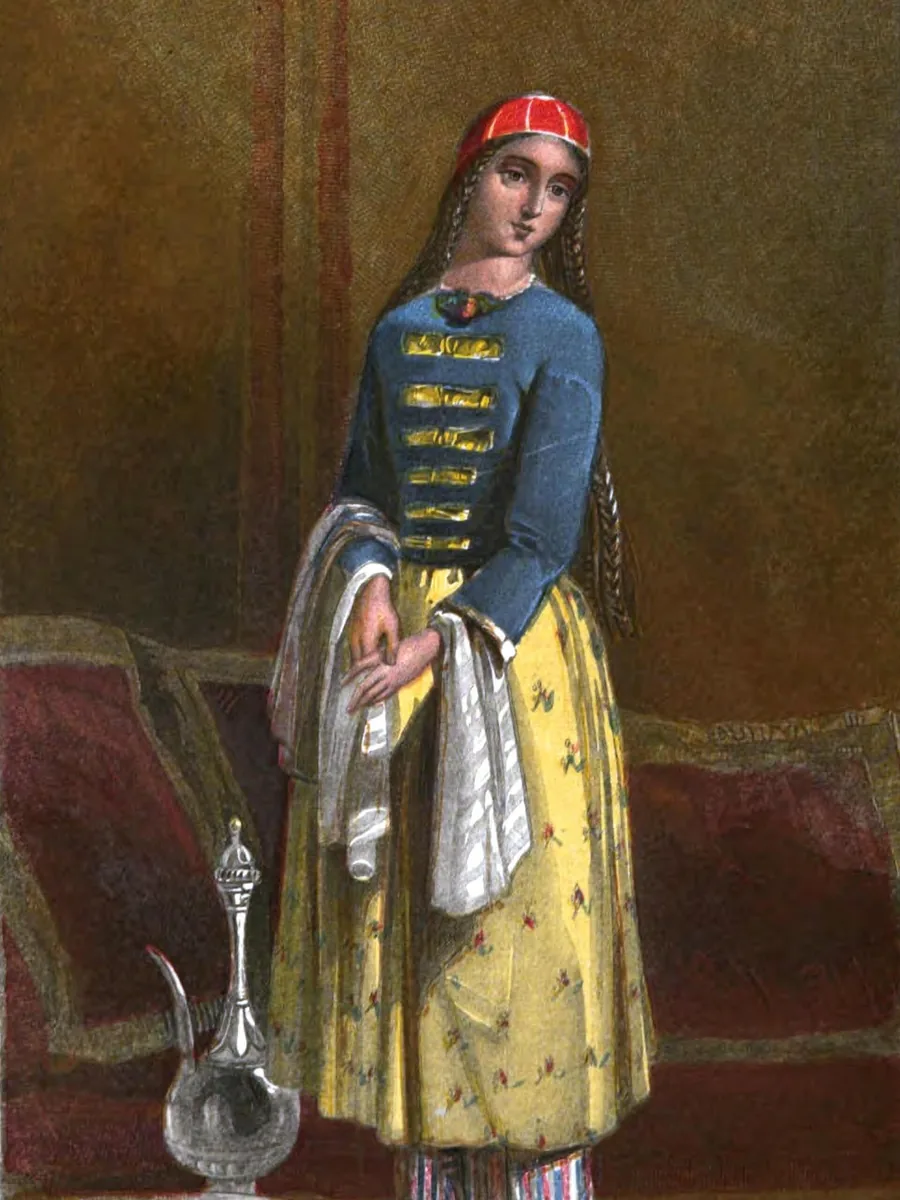
The traditional dress shows it too: the fitted cherkeska for men, and for women a long dress over which girls, from puberty until marriage, wore a leather corset. In dance, the summit of the art is the dance on the toes, done above all in the Islamey. More in Circassian clothing and Circassian dance.
A modern perspective
The “Circassian beauty” stereotype says more about the people who wrote it than about Circassians. It was shaped by Genoese merchants, Ottoman courts, European poets and an American showman, and much of it grew out of the slave trade. Read on its own, it reduces a whole people to a look.
For many readers, though, the phrase is the first door into Circassian culture. Behind it are a people with their own language, Kabardian and Adyghe, their own code of conduct, their own dances, music and names, and a diaspora of millions. Start with Who are the Circassian people?, Circassian girl names or famous Circassians in history.
Free on iPhone & Android
Circassian language and culture, in one app
Kabardian and Adyghe lessons, Habze culture lessons, a library of books, films and music, and Circassians from around the world to talk to.

4.9 on the App Store 53,000+ people in 100+ countries
Circassian beauty: questions
What is “Circassian beauty”?
A stereotype, centuries old, that Circassian women (and, less often, men) were unusually beautiful. It appears in Middle Eastern and Balkan folk songs, Ottoman history and Western literature and art.
Why were Circassians considered beautiful?
The reputation dates back to the Late Middle Ages, when Genoese traders visited the Circassian coast, and grew through the Ottoman world, where many Circassian women lived in the harems. From the 18th century European poets and painters made it an ideal of beauty.
Were Ottoman sultans’ mothers Circassian?
Many consorts and mothers of Ottoman sultans were Circassian, among them Mahidevran, Şevkefza Sultan and Rahime Perestu Sultan.
Who were Barnum’s “Circassian beauties”?
Performers P. T. Barnum exhibited in the 1860s, whom he claimed were Circassian. Their curly “big hair” had no precedent in earlier pictures of Circassians.
Does “Caucasian” come from the Circassians?
It comes from the Caucasus. Christoph Meiners (1785) and Johann Friedrich Blumenbach (1795) used it for a racial category at a time when Europeans thought the Circassians and Georgians, both peoples of the Caucasus, the most beautiful.
What does Habze say about beauty?
Habze values conduct: clear and kind speech, restraint, modesty and dignity. Chatter, sarcasm and boasting are frowned upon.
Sources
- Wikipedia (English), “Circassian beauty”. en.wikipedia.org/wiki/Circassian_beauty
- Wikipedia (English), “Caucasian race”. en.wikipedia.org/wiki/Caucasian_race
- Wikipedia (English), “Letters on the English”. en.wikipedia.org/wiki/Letters_on_the_English
- Wikipedia (English), “Adyghe Khabze”. en.wikipedia.org/wiki/Adyghe_Khabze
- Wikipedia (English), “Circassian dance”. en.wikipedia.org/wiki/Circassian_dance
- Wikipedia (Russian), «Адыги» (clothing). ru.wikipedia.org/wiki/%D0%90%D0%B4%D1%8B%D0%B3%D0%B8
Want more like this?
The app has 64 short lessons on Circassian culture and Habze, plus a course in Kabardian or Adyghe to learn the language behind them.
Download free53,000+ people in 100+ countries
