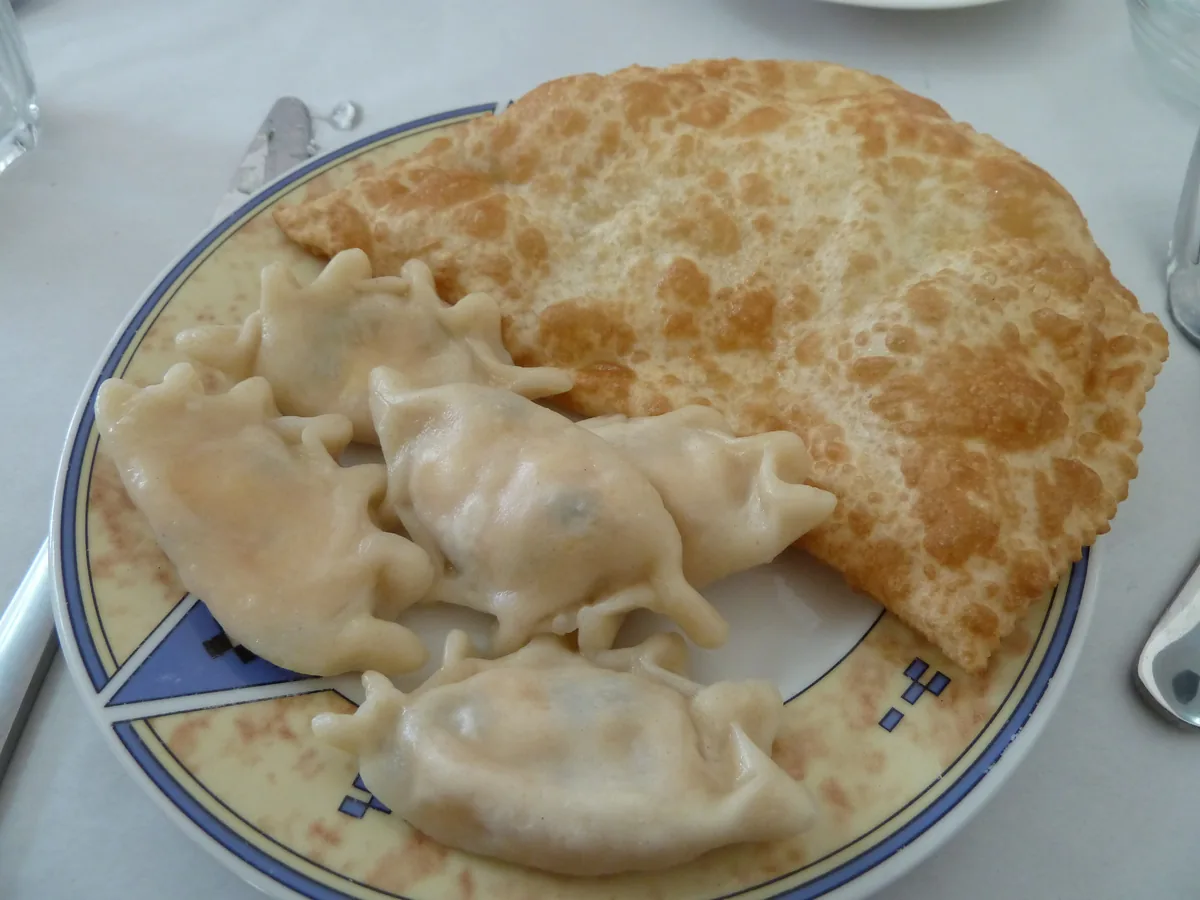
Circassian food is built on a few things done well: chicken and meat in rich sauces of walnut or soured cream with garlic and red pepper, soft Adyghe cheese, and pasta, a stiff millet or cornmeal porridge eaten instead of bread. The best-known dish is Circassian chicken in walnut sauce; the best-known product is Adyghe cheese. Here are ten dishes to try, each with a full recipe.
Circassian cuisine is hearty mountain food from the Caucasus, carried by families to Turkey, Jordan, Israel and beyond. Its signatures are walnut and soured-cream sauces, fresh cheese and the stiff porridge called pasta. All ten dishes below are in the Circassian App’s recipe collection, and each links to its full recipe.
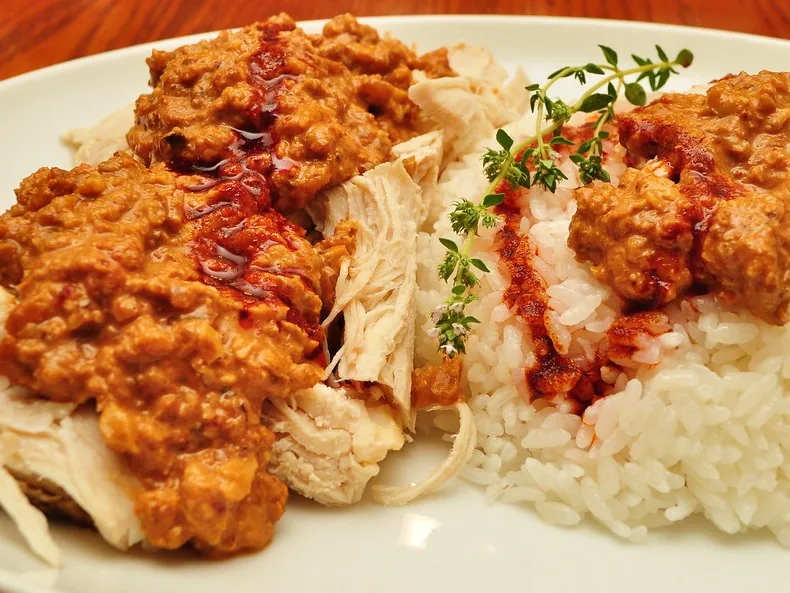
1. Circassian chicken (Çerkez tavuğu)
The diaspora’s most famous dish: shredded boiled chicken under a rich paste of crushed walnuts and stock thickened with stale bread, served cool with a drizzle of red-pepper oil. A classic of Circassian cooking, it was adopted by Ottoman court cuisine, and in Turkey it is known as Çerkez tavuğu. Recipe: Circassian chicken in walnut sauce.
2. Heliwe
The national Circassian sweet: flour toasted in butter to a nutty gold, bound with honey or sugar syrup, then set and cut into squares. It is a festive dish, made for celebrations. Don’t confuse it with haliva, the fried cheese pies (number 10). Recipe: heliwe.
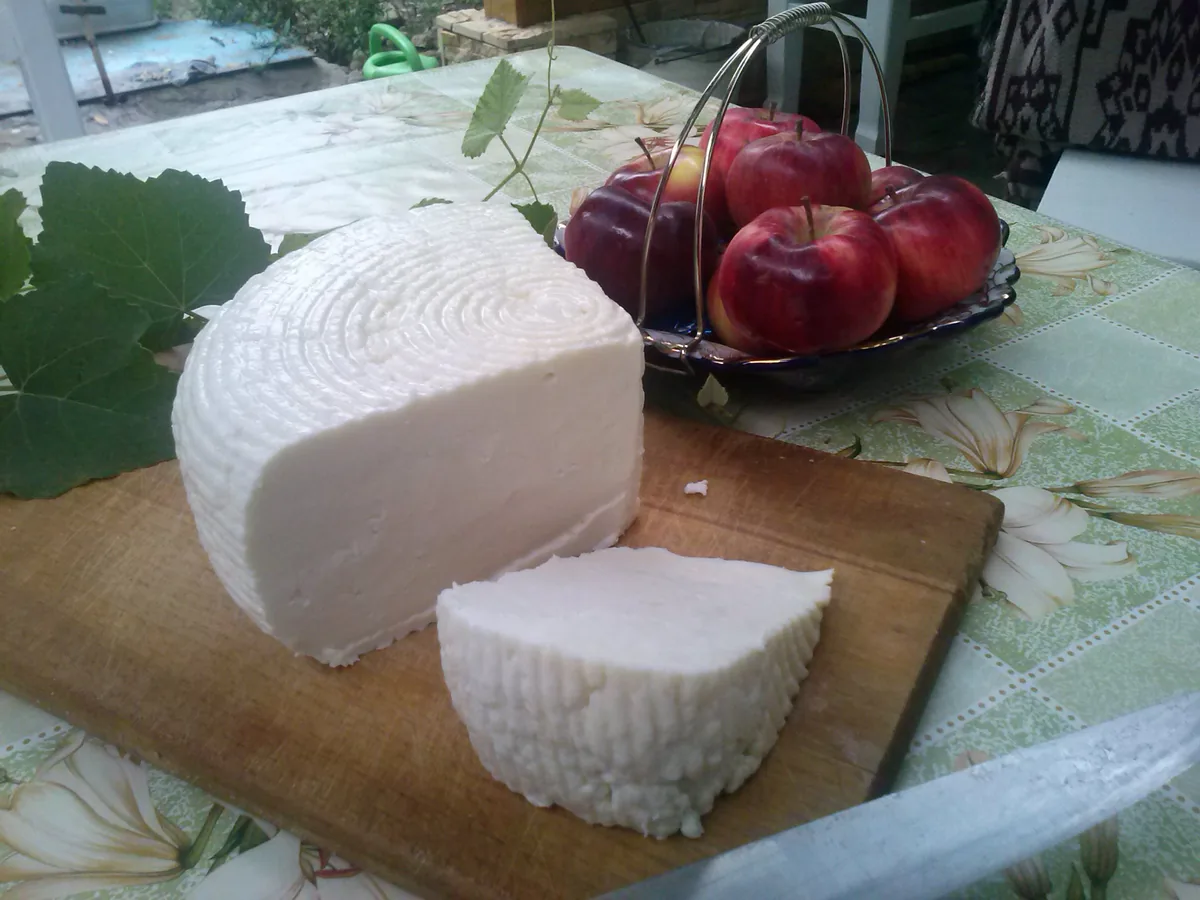
3. Adyghe cheese
The famous soft, mild basket cheese: milk set with sour whey and drained in a woven basket that leaves its pattern on the cheese. It holds its shape when fried or baked, and since 2004 “Adyghe cheese” has been a protected appellation of origin of the Republic of Adygea. In Kabardian, cheese is кхъуей; in Adyghe, къуае. Recipe: how to make Adyghe cheese at home.
4. Libzhe
Libzhe (Kabardian лыбжьэ) is a hot dish, not a sauce: the Kabardian dictionary calls it a national dish like a goulash, served without a side. The app has three of them: jedlibzhe with chicken (number 7); lyghurlybzhe, beef or lamb fried in its own fat and stewed in a soured-cream and red-pepper gravy; and jeshlybzhe, white beans mashed into a thick sauce with fried onion, red pepper, fresh cheese and soured cream.
5. Pasta
Circassian pasta (Kabardian пIастэ) is not Italian pasta. It is the staple that stands in for bread: a very stiff porridge of millet or cornmeal, cut into firm slabs and eaten hot or cold with almost everything. The Kabardian dictionary describes it the same way: a stiff porridge, usually of millet, eaten instead of bread with meat and other dishes. Recipe: pasta.
6. Shchips
The great Circassian sauce: a warm gravy of garlic and red pepper built on broth and soured cream, poured over meat, poultry or pasta. Recipe: shchips.
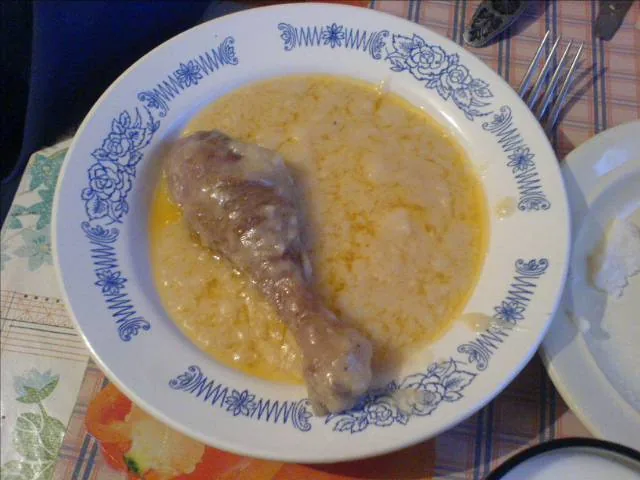
7. Jedlibzhe
The everyday chicken classic of the homeland: pieces fried with onion, then simmered in soured cream, garlic and red pepper until rich and glossy. Lyghurlybzhe is its red-meat counterpart. Recipe: jedlibzhe.
8. Lakum
Light yeast dough rolled thin, cut into rectangles and deep-fried into golden puffs, dusted with sugar: a celebration staple served with tea, cheese or honey. The Kabardian dictionary lists лэкъум as an Adyghe national dish. Recipe: lakum.
9. Honeyed dried pears
Sweet pears (Kabardian кхъужь) are dried and ground to a pear flour, then bound with honey into a paste that keeps: eaten as small honeyed sweets or used as the filling for sweet pear pasties. Recipe: honeyed dried pears.
10. Cheese pies: haliva, guubat and delen
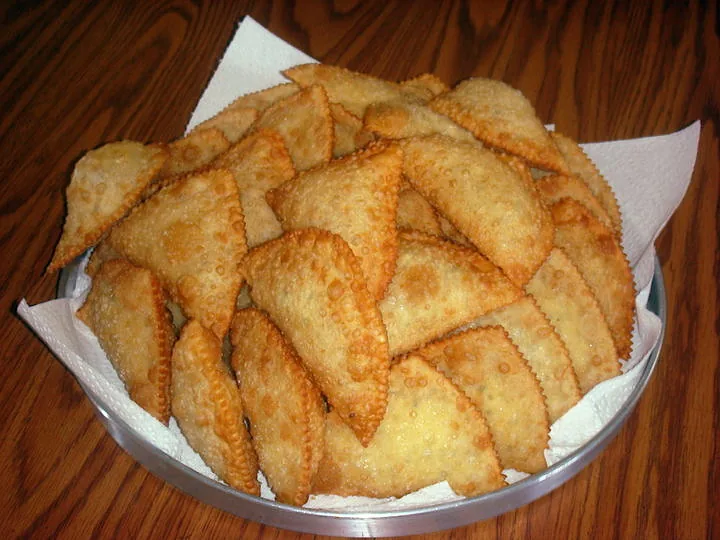
Filled pastries are everywhere in Circassian cooking. Haliva (Kabardian хьэлывэ) are crisp fried turnovers of thin dough filled with Adyghe cheese or potato and sealed into triangles, a holiday favourite made in big batches (haliva). Guubat are golden squares of flaky pastry stuffed with cheese and baked, the everyday bakery snack of Adygea. Delen is a large round pie of thin dough with cheese, or potato and greens, cooked on a dry griddle and brushed with plenty of butter. And beside them on the table, the boiled dumplings called mataz.
60-second lesson
Five Circassian food words
The basics of the Circassian table, from cheese to honey. Tap a word to hear it in Kabardian (East) and Adyghe (West), then take the quiz: the app’s own question, five rounds.
The quiz needs JavaScript.
In the app, questions like these are in every lesson, and the words you get wrong come back for review sooner.
All the food and drink words, in both dialects, with example sentences: Food and drinks in Circassian. In the app they are in the “Food” unit (Section 2, My World).
Common ingredients and techniques
A small set of ingredients does most of the work: walnuts, garlic, dried red pepper, soured cream and fresh cheese, with millet, cornmeal and wheat for the starch. Many dishes start from boiled chicken or meat, and the broth is not wasted: it becomes the base of sauces like shchips. Of the app’s 53 recipes, 32 are everyday dishes, 18 are for celebrations and 3 belong to ceremonies.
The words for the table, from the app, in both dialects:
| Meaning | Kabardian | Adyghe |
|---|---|---|
| cheese | кхъуейqkhwey | къуаеqwae |
| chicken | джэдdzhed | чэтыchetə |
| meat | лыly | лыlə |
| tea | шейshey | щайshchay |
| Let’s eat. | Еуэ дышхэнщ.Yewe dyshkhenshch. | НекIо, тышхэщт.Nyek'o, tyshkheshcht. |
| This is delicious! | Мыр IэфIщ!Myr 'ef'shch! | Мыр IэшIу!Myr 'esh'u! |
Food and hospitality
Food is at the heart of Circassian hospitality. By Habze, a guest is served the best the house has, before any questions; the 19th-century traveller James Bell noted that bread and salt were very often the first thing offered to a traveller. The elder who leads the table sets its order: see Circassian table etiquette, and for the feast of feasts, Circassian weddings.
Why Circassian food matters
For Circassians far from the Caucasus, cooking these dishes is one of the easiest ways to keep the culture at home. Circassian chicken crossed into Turkish cuisine long ago, and in 2021 Turkey registered Pınarbaşı Uzunyayla Circassian cheese as a geographical indication (Circassians in Turkey).
The names carry the culture too: pasta, libzhe and lakum are Circassian words, and learning the language makes the kitchen speak. Start with how to learn Circassian, and find all 53 recipes from the app on one page: Circassian recipes.
Free on iPhone & Android
Circassian language and culture, in one app
Kabardian and Adyghe lessons, Habze culture lessons, a library of books, films and music, and Circassians from around the world to talk to.

4.9 on the App Store 53,000+ people in 100+ countries
Circassian food: questions
What is the most famous Circassian dish?
Circassian chicken: shredded boiled chicken in a walnut and garlic sauce, known in Turkey as Çerkez tavuğu. The most famous product is Adyghe cheese.
What is Circassian pasta?
Not Italian pasta: a very stiff porridge of millet or cornmeal, cut into slabs and eaten instead of bread with sauces, cheese and meat.
What is libzhe?
A hot dish of chicken, meat or beans stewed in a thick soured-cream gravy with red pepper; the Kabardian dictionary compares it to a goulash.
What is the difference between heliwe and haliva?
Heliwe is a sweet of flour toasted in butter and bound with honey or syrup; haliva are fried pies filled with cheese or potato.
Is Adyghe cheese protected?
Yes. Since 2004 “Adyghe cheese” has been a protected appellation of origin: only certified producers in Adygea may use the name.
Where can I find Circassian recipes?
The Circassian App has 53 recipes in its Recipes section, and all of them are on the Circassian recipes page of this site.
Sources
- The Circassian App’s 53 recipes (the Recipes section of the app), as on Circassian recipes.
- Wikipedia (English), “Circassian chicken”. en.wikipedia.org/wiki/Circassian_chicken
- Wikipedia (Russian), «Адыгейский сыр». ru.wikipedia.org/wiki/Адыгейский_сыр
- Apazhev M. L., Kokov J. N. Kabardian-Circassian-Russian dictionary. Nalchik: Elbrus, 2008, pp. 290, 292, 294, 388, 539.
- The appellation of origin and the hospitality facts: see the sources on the Adyghe cheese recipe, Circassian hospitality.
- The Circassian App: lesson vocabulary and audio course lines (Kabardian and Adyghe).
Want more like this?
The app has 64 short lessons on Circassian traditions, including four on food and table customs. Plus a course in Kabardian or Adyghe to learn the language behind them.
Download free53,000+ people in 100+ countries
