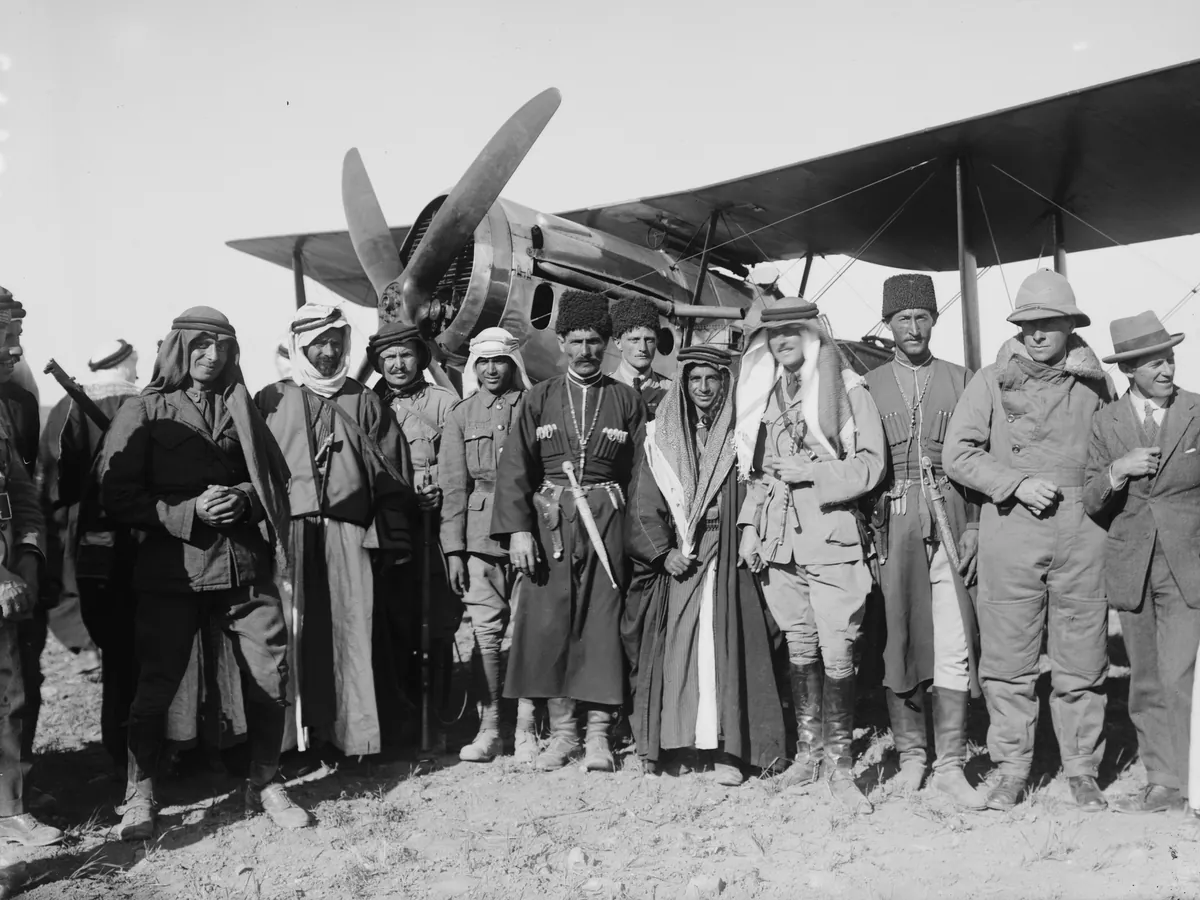
About 100,000 to 170,000 Circassians live in Jordan. Their families arrived from 1878, when the Ottoman government settled Circassians in the region: they revived Amman, which had lain almost empty for centuries, and founded Wadi al-Seer, Jerash and other villages nearby. Today they are about 5% of Amman, hold three seats in parliament together with the Chechens, and the king’s Circassian Bodyguard still serves in the royal palaces. About 17% of Jordan’s Circassians speak Adyghe.
The Circassian community in Jordan is small, but its place in the country’s history is large. Circassians brought Amman, now the capital, back to life in 1878, a Circassian guard serves the king, and Circassians have long held posts in government and the army while keeping their Adyghe identity, language and customs.
How Circassians came to Jordan
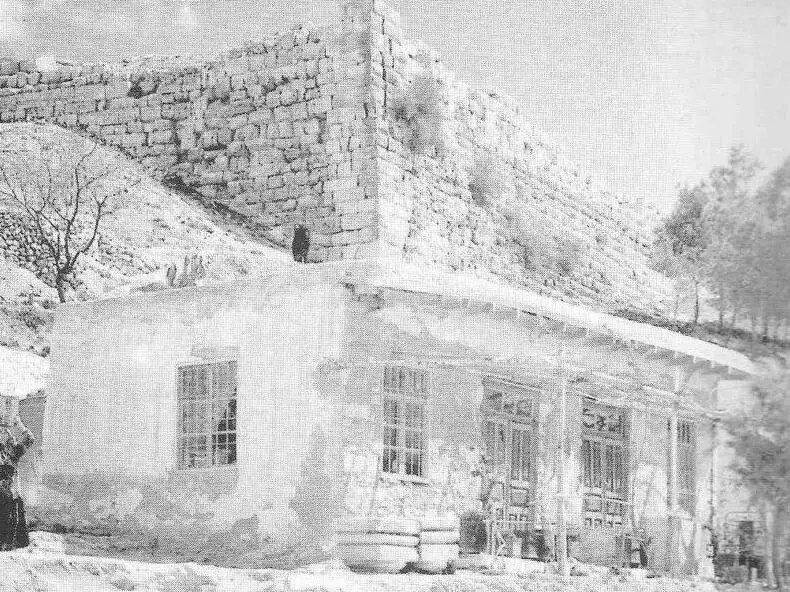
In 1878 the Ottoman government began to settle Circassians, whose families had left the Caucasus for the Ottoman Empire, in its Syrian provinces, which included what is now Jordan. They were given land close to water sources and grain fields. One of the first places was Amman: the ancient city, the Philadelphia of Greek and Roman times, had lain largely empty for centuries, and several hundred Circassians settled among its Roman ruins. By 1893 about 1,000 Circassians lived there.
The first group belonged to the Shapsug branch of the Circassians, and Kabardians and Abzakhs joined them later. A second wave between 1901 and 1906, which included many Chechens, founded five more villages around Amman:
| Settlement | Founded | Settlers |
|---|---|---|
| Amman | 1878 | First wave: Circassian |
| Wadi al-Seer | 1880 | First wave: Circassian |
| Jerash | 1884 | First wave: Circassian |
| Naour | 1901 | Second wave: Circassian and Chechen |
| Zarqa | 1902 | Second wave: Circassian and Chechen |
| Russeifa | 1905 | Second wave: Circassian and Chechen |
| Swaylih | 1905 | Second wave: Circassian and Chechen |
| Sukhna | 1906 | Second wave: Circassian and Chechen |
Amman grew quickly once the Hejaz Railway was running in central Transjordan, from 1903, bringing investment from merchants of Salt, Damascus and Nablus. Around the time of the First World War there were 5,000 to 6,000 Circassians in Transjordan. The small Circassian town would become the capital of a modern kingdom.
The Circassian Royal Guard
The most visible sign of the Circassian presence in Jordan is the king’s Circassian Bodyguard. Circassians guarded Emir Abdullah, the founder of the kingdom, and today the Circassian Bodyguard is a separate ceremonial unit within Jordan’s Special Royal Guard Command, on duty in the royal palaces, its members chosen from Jordan’s Circassians. It is a point of deep pride for the community.
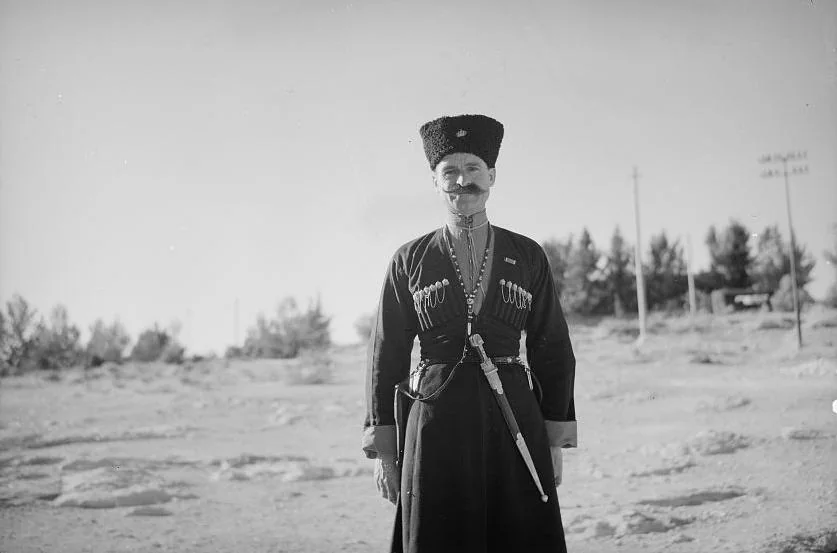
More on the coat, the hat and the dagger in our guide to Circassian clothing.
Cultural preservation in Amman
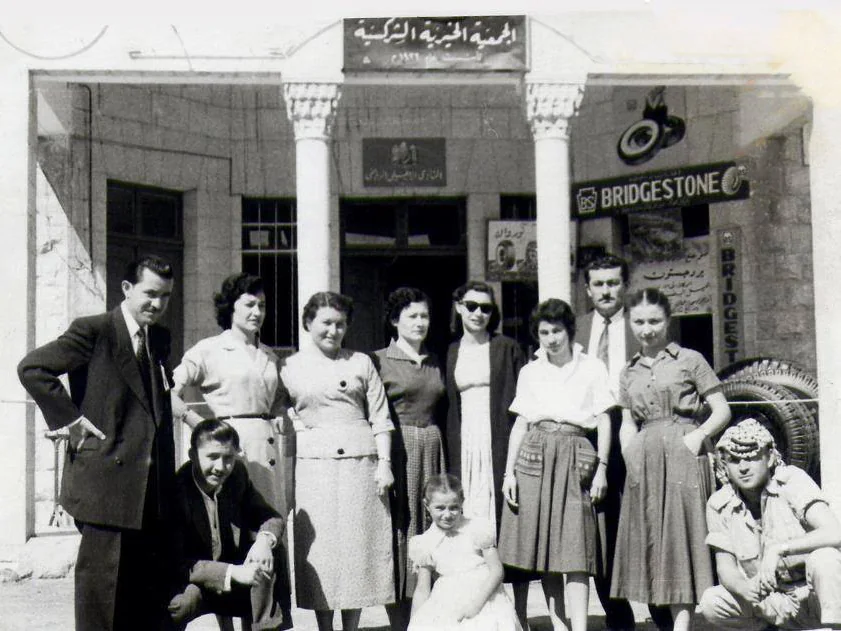
Circassians in Amman built some of the oldest institutions in the country. The Circassian Charity Association, founded in 1932, is Jordan’s oldest charity: it helps the poor, gives Circassians scholarships to study at universities in Kabardino-Balkaria and Adygea, and supports a school between Naour and Wadi al-Seer that teaches the language. The Al-Ahli Club, founded in 1944, brings Circassians together for sport and social and cultural events, and since 1993 a Folklore Committee has kept traditional song and dance alive.
Since the 1950s, Circassian associations and youth clubs have staged performances about the journey from the Caucasus, the first harvests and the first Circassian homes in Jordan. Over time they moved from Circassian audiences to national events such as the annual Jerash Festival of Arts. Circassians have long called themselves Adyghe, while “Circassians” was the name outsiders used; in Jordan today both names are used (what Adyghe means).
Circassians in Jordanian society
Circassians, together with Chechens, have three seats reserved in the Jordanian parliament. They also hold more ministerial posts than their numbers would suggest, which some Jordanians see as an unofficial quota, and many work in government, the army and the intelligence services. Today Circassians make up about 5% of Amman’s population, most of them part of the city’s middle class.
Circassians in Jordanian public life include:
- Ismael Babouk (1841–1920), a Kabardian who was among the first settlers of Amman and its first mayor, from 1909 to 1911.
- Sa’id al-Mufti (1898–1989), the ninth prime minister of Jordan, who held the office three times between 1950 and 1956.
- Toujan al-Faisal (born 1948), a former television journalist and the first woman in Jordan’s parliament.
- Emanne Beasha (born 2008), a singer from Amman with a Jordanian father of Circassian descent, winner of the fifth season of Arabs Got Talent.
Language preservation challenges
Keeping the language is the community’s biggest challenge. The first settlers spoke Kabardian, Shapsug, Abzakh and Bzhedug, and over time these varieties have merged. An estimated 17% of Jordan’s Circassians speak Adyghe, and surveys find that 21% of children use it at home. For a long time schools taught only in Arabic, so many parents spoke Arabic at home to help their children at school, and Arabic is now the main language of most families. Adyghe in Jordan is classed as severely endangered.
There is work to turn this around:
- The Prince Hamza Ibn Al-Hussein Secondary School in Amman, set up by Circassians with the support of King Hussein, teaches Adyghe to around 750 students.
- The Circassian Charity Association supports a second school, between Naour and Wadi al-Seer, that teaches the language.
- Jordan’s Circassians have produced their own dictionaries, among them a Circassian–Arabic dictionary published in 1988.
- During the COVID-19 pandemic, online courses let students in Jordan learn from teachers in the Caucasus.
Families do the rest: see how Circassian families keep the language alive. The Circassian App teaches both Kabardian and Adyghe in short lessons with audio; its interface is in English, Russian, Turkish or Arabic. Not sure which one your family spoke? Read Kabardian vs Adyghe and how to learn Circassian.
For Jordan’s Circassians, the language ties them to the Caucasus, to the wider Circassian diaspora, from Turkey to the homeland, and to the values of Habze that have shaped the community through almost 150 years in Jordan.
Free on iPhone & Android
Meet Circassians from around the world
Community chats, voice rooms and private messages, plus Kabardian or Adyghe lessons to learn the language along the way.

4.9 on the App Store 53,000+ people in 100+ countries
Circassians in Jordan: questions
How many Circassians live in Jordan?
Estimates range from about 100,000 to 170,000. Their communities grew up in and around Amman and Jerash.
Did Circassians found Amman?
Amman is an ancient city, but it had lain largely empty for centuries when Circassians settled there in 1878. They revived it, and they are credited with founding the modern city.
What is the Circassian Guard in Jordan?
The king’s Circassian Bodyguard, a ceremonial unit of Jordan’s Special Royal Guard Command on duty in the royal palaces. Its members are chosen from Jordan’s Circassians, and Circassians already guarded Emir Abdullah, the kingdom’s founder.
How many seats do Circassians have in the Jordanian parliament?
Three seats are reserved for Circassians and Chechens together.
Do Circassians in Jordan still speak Circassian?
About 17% do, and about 21% of children use it at home. A secondary school in Amman and a school between Naour and Wadi al-Seer teach it.
Which Circassian language is spoken in Jordan?
Both: the settlers spoke Kabardian (East Circassian) and the Shapsug, Abzakh and Bzhedug dialects of Adyghe (West Circassian), which have merged over time.
Sources
- Wikipedia (English), “Circassians in Jordan”. en.wikipedia.org/wiki/Circassians_in_Jordan
- Wikipedia (English), “Amman”. en.wikipedia.org/wiki/Amman
- Wikipedia (English), “Jordan Royal Guard”. en.wikipedia.org/wiki/Jordan_Royal_Guard
- Wikipedia (English), “Adyghe language”. en.wikipedia.org/wiki/Adyghe_language
- Wikipedia (English), “Sa'id Mufti”. en.wikipedia.org/wiki/Sa'id_Mufti
- Wikipedia (English), “Ismael Babouk”. en.wikipedia.org/wiki/Ismael_Babouk
- Wikipedia (English), “Toujan al-Faisal”. en.wikipedia.org/wiki/Toujan_al-Faisal
- Wikipedia (English), “Emanne Beasha”. en.wikipedia.org/wiki/Emanne_Beasha
Meet Circassians from around the world
Chat with Circassians in Turkey, Jordan, Russia and beyond, and learn Kabardian or Adyghe together in short daily lessons.
Download free53,000+ people in 100+ countries
