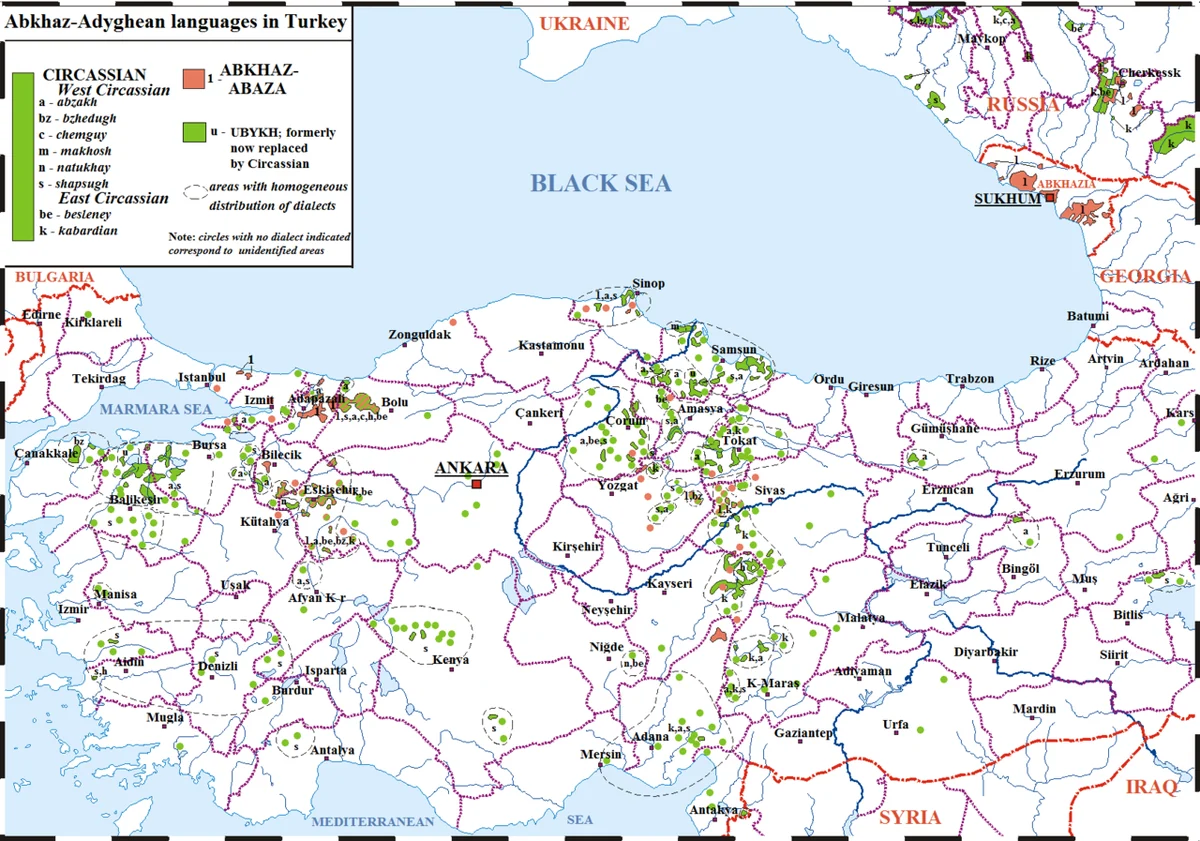
Turkey has the largest Circassian community in the world: about 2 to 3 million people, by most estimates. Their families settled in the Ottoman Empire in the 19th century, and their villages are spread across Anatolia, from Samsun and Tokat to Kayseri, Düzce and Balıkesir. Kabardians are the largest group, then Abzakhs and Shapsugs. The language is under pressure, but young Adyghe people are learning it again.
How Circassians came to Turkey
Most Circassians in Turkey descend from families who left the Caucasus for the Ottoman Empire in the 19th century, above all in the 1860s. The Ottoman authorities gave the settlers land near water and grain fields across Anatolia and the Balkans, and many of the villages they founded still exist. In late Ottoman usage the word “Circassian” covered all North Caucasians, and Abazins and Abkhazians are still often counted with them.
Where Circassians live in Turkey
Circassian communities are found all over Turkey, with the largest numbers in the Marmara region, Central Anatolia and the Black Sea region, and in Istanbul. Turkey’s census does not count ethnicity, so all figures are estimates: about two million by one count, three million in EU reports, and Turkish sources cite even higher numbers. Each group settled mainly in a few provinces:
| Group | Main provinces |
|---|---|
| Kabardians | Kayseri, Tokat, Sivas, Kahramanmaraş |
| Abzakhs | Samsun, Sinop, Tokat, Afyonkarahisar, Balıkesir, Sakarya |
| Shapsugs | Çorum, Samsun, Balıkesir, Afyonkarahisar, Bolu, Aydın, Manisa, Sakarya, Bursa |
| Ubykhs | Balıkesir, Bolu, Sakarya, Samsun, Ordu |
| Bzhedugs | Çanakkale (Biga), Afyonkarahisar |
| Hatuqwais | Kayseri, Bilecik |
| Chemguys (Temirgoys) | Düzce, Bilecik |
| Makhoshes | Samsun (Alaçam) |
| Besleneys | Çorum, Amasya |
Kabardians are the largest group, followed by Abzakhs and Shapsugs. The Kabardians of the Uzunyayla plateau (Kayseri and Sivas) and of Göksun have kept the language best; the Ubykh language, once spoken in villages around Balıkesir and Sakarya, has died out.
Cultural preservation
Circassian associations organise language classes, dance groups and community events across the country. The largest network is KAFFED, the Federation of Caucasian Associations; another is ÇERFED, the Federation of Circassian Associations. Dance is one of the strongest links to the Caucasus: see Circassian dance.
Since 2004 Turkish state radio and television have broadcast in Kabardian, and East Circassian was the first Circassian language on TRT. Food carries the culture too: Pınarbaşı Uzunyayla Circassian cheese was registered with a geographical indication by the Turkish Patent and Trademark Office on 14 April 2021.
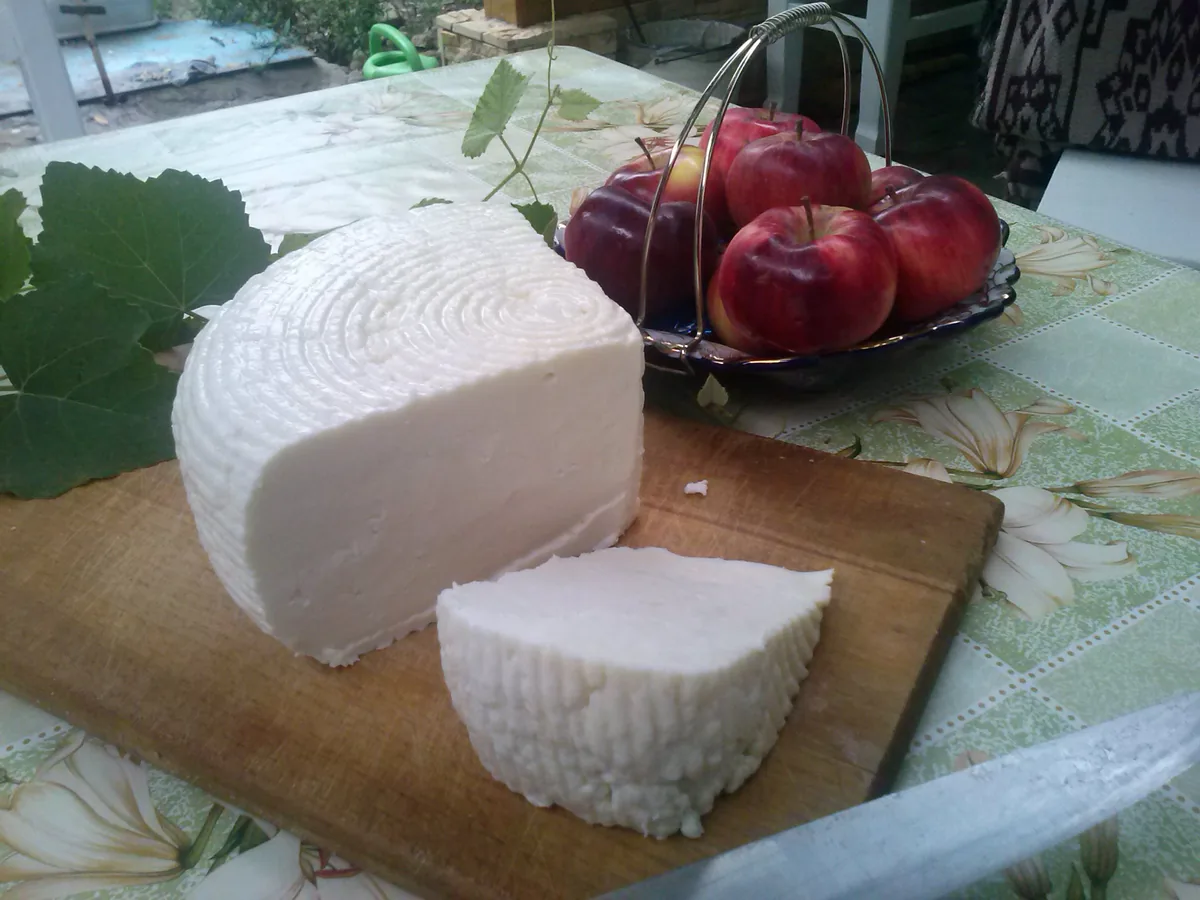
How to make Circassian cheese at home.
Language challenges
The biggest challenge is language loss. Grandparents often speak Kabardian or Adyghe fluently, but younger generations increasingly grow up with Turkish only. One estimate, by Nusret Baş, then president of a federation of Circassian associations, put fluent speakers at about 5% of Circassians in Turkey, and UNESCO counts Adyghe among the severely endangered languages of Turkey.
There is a revival too:
- Since 2012, Adyghe can be taken as an elective in state schools under “Living Languages and Dialects”, though a class only opens when enough students sign up.
- Düzce University has a Department of Caucasian Languages and Cultures, in a region where many Shapsugs and Abzakhs live; Boğaziçi University has offered elective Adyghe courses since 2013.
- Which alphabet to use is debated. KAFFED adopted Cyrillic in 2004 to stay in step with the Caucasus; the Ministry of Education approved a Latin alphabet, ABX, for the school electives, a decision KAFFED opposed. See the Circassian alphabet.
Young Circassians in Turkey are learning the language again, through associations, online resources and apps. More in how to learn Circassian and Kabardian vs Adyghe.
Circassians in Turkish society
Circassians are one of the largest ethnic minorities in Turkey, and most are Sunni Muslims. They have long been part of Turkish society at every level, while keeping a distinct identity through families, associations, Habze, music and food. Besides Turkish and Circassian, some communities in Antakya and Reyhanlı also speak Arabic.
Why it matters
With the largest Circassian population of any country, Turkey holds much of the future of the Circassian language and culture. Every young Circassian there who learns the language, joins a dance group or teaches their children about Habze helps keep it alive. Read about the Circassian diaspora today and Circassians in Jordan.
Free on iPhone & Android
Meet Circassians from around the world
Community chats, voice rooms and private messages, plus Kabardian or Adyghe lessons to learn the language along the way.

4.9 on the App Store 53,000+ people in 100+ countries
Circassians in Turkey: questions
How many Circassians live in Turkey?
Estimates range from about two million to three million (EU reports), and some Turkish sources give more. Turkey’s census does not count ethnicity.
Where do Circassians live in Turkey?
All over the country, especially in the Marmara, Central Anatolia and Black Sea regions: Kayseri, Samsun, Tokat, Sivas, Çorum, Balıkesir, Sakarya, Bolu, Düzce and Istanbul, among others.
Which Circassian groups live in Turkey?
Kabardians are the largest group, followed by Abzakhs and Shapsugs; there are also Ubykhs, Bzhedugs, Hatuqwais, Chemguys, Makhoshes and Besleneys.
Do Circassians in Turkey still speak Circassian?
Many older people do, but fewer young people: one estimate puts fluent speakers at about 5%. The Kabardians of Uzunyayla have kept the language best.
Can you learn Circassian in Turkish schools?
Yes, as an elective since 2012, when enough students apply. Düzce University and Boğaziçi University also teach it.
Which alphabet do Circassians in Turkey use?
Both are in use: KAFFED teaches Cyrillic, as in the Caucasus, while the school electives use the Latin ABX alphabet.
Sources
- Wikipedia (English), “Circassians in Turkey”. en.wikipedia.org/wiki/Circassians_in_Turkey
- Wikipedia (English), “Circassians”. en.wikipedia.org/wiki/Circassians
- Wikipedia (English), “Adyghe language”. en.wikipedia.org/wiki/Adyghe_language
- Wikipedia (Turkish), “Türkiye Çerkesleri”. tr.wikipedia.org/wiki/T%C3%BCrkiye_%C3%87erkesleri
- Wikipedia (Turkish), “Kabardeyce”. tr.wikipedia.org/wiki/Kabardeyce
- Wikipedia (Turkish), “Çerkes peyniri”. tr.wikipedia.org/wiki/%C3%87erkes_peyniri
Meet Circassians from around the world
Chat with Circassians in Turkey, Jordan, Russia and beyond, and learn Kabardian or Adyghe together in short daily lessons.
Download free53,000+ people in 100+ countries
