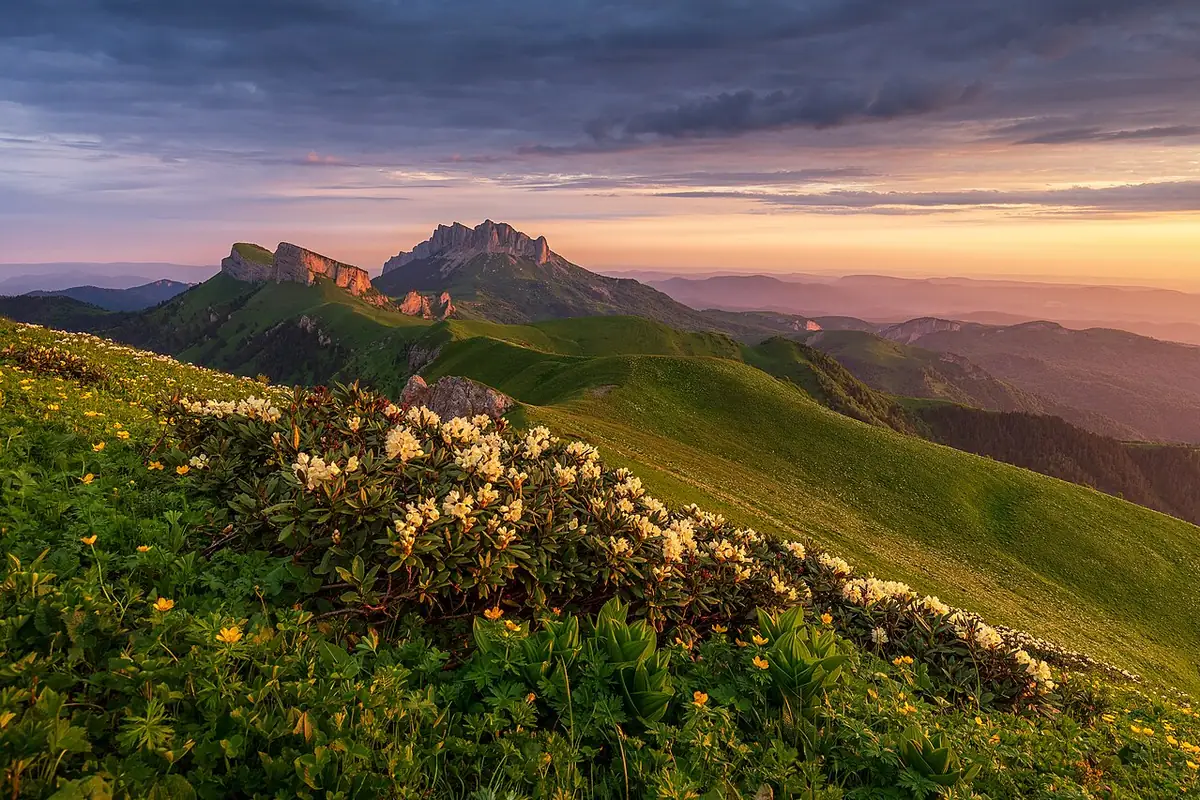
The Republic of Adygea is a small republic of Russia in the Northwest Caucasus, entirely surrounded by Krasnodar Krai, and the homeland of the western Circassians. Its capital is Maykop, Мыекъуапэ in Adyghe. The Adyghe are 25.7% of its 496,934 people (2021 census), Adyghe is an official language alongside Russian, and the green Circassian flag with twelve stars is the republic’s official flag.
The Republic of Adygea is the political and cultural heart of the western Circassian world. Adyghe is official here, as Kabardian is in Kabardino-Balkaria and Karachay-Cherkessia, and for Circassians abroad, from Turkey and Jordan to Germany, Adygea is part of the historical homeland.
Geography and location
Adygea is an enclave: it lies entirely within Krasnodar Krai. With 7,792 km² it is the fifth-smallest region of the Russian Federation. Maykop, the capital and largest city, has 143,385 people (2021 census), about a third of the republic.
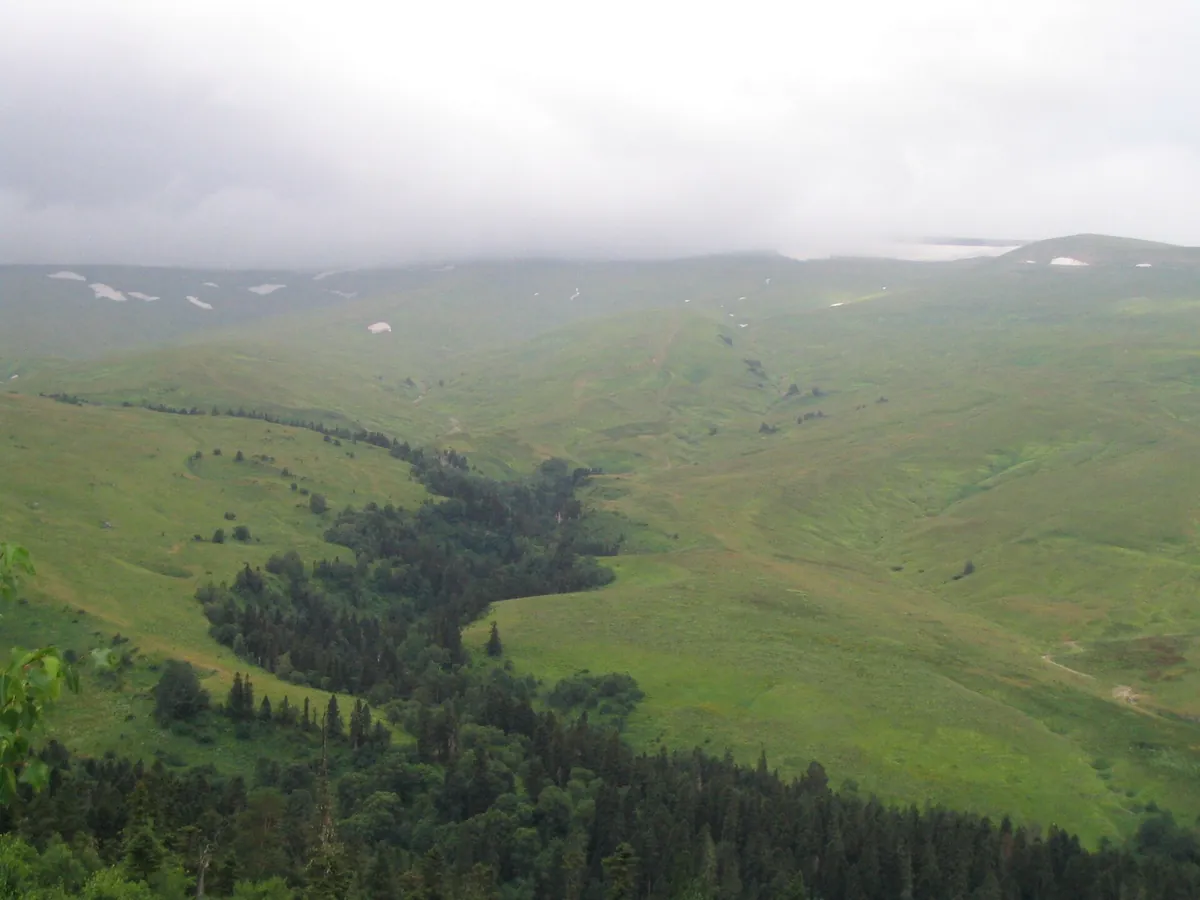
The north is farmland in the basin of the Kuban; the south rises into the Western Caucasus. The Lago-Naki plateau there, up to 2,200 m high and known for its alpine meadows, belongs to the Caucasus Nature Reserve and to the Western Caucasus World Heritage Site.
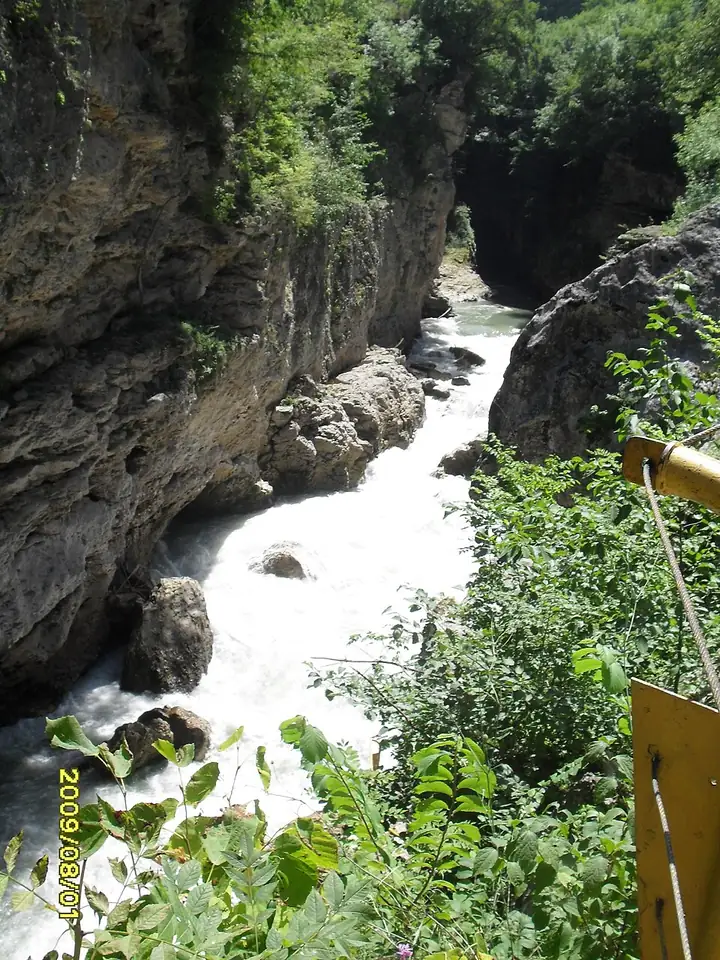
The Belaya river runs through Maykop and on through the mountains. At the village of Kamennomostsky it has cut the Khadzhokh gorge, about 400 m long and 35 m deep, a natural monument since 1979, and on its tributary, the Bolshoy Rufabgo, twelve waterfalls fall through a beech forest.
Language in Adygea
Adyghe (West Circassian) is an official language of the republic alongside Russian. It is written in Cyrillic with 66 letters (the Circassian alphabet). Adyghe State University in Maykop and the Kerashev Adyghe Republican Institute for Humanitarian Research work on the language, its literature and its history.
Yet the Adyghe are only about a quarter of the republic’s 496,934 people (25.7% in the 2021 census); Russians are 64.4%, with Armenians (3.3%), Kurds (1.2%) and others. Even at home, Adyghe shares daily life with Russian. How it differs from Kabardian: Kabardian vs Adyghe.
In Adyghe, saying where you are from, from the audio course:
| Meaning | Kabardian | Adyghe |
|---|---|---|
| Where are you from? | Дэнэ ущыщ?Dene ushchyshch? | Тыдэ укъикIырэ?Tyde uqik'yre? |
| I’m from Maykop. | – | Сэ Мыекъуапэ сыкъекIы.Se myyeqwape syqyek'y. |
| Circassian (the language) | – | адыгабзэadygabze |
Culture in Adygea
The National Museum of the Republic of Adygea in Maykop is the largest of the republic’s museums; among its treasures is an early Circassian flag used before 1840. Nalmes, the State Academic Folk Dance Ensemble of Adygea (the name means “diamond”), was founded in 1936 and has danced on the stage of the State Kremlin Palace in Moscow. More on the dances in Circassian dance.
The republic’s best-known product is Adyghe cheese, a soft fresh cheese made from milk set with soured whey. Its Adyghe name, матэкъуае, joins матэ, basket, and къуае, cheese, after the baskets the curds drain in. It became a brand in 1980, when mass production began, and in 2004 Russia’s patent office registered “Adyghe cheese” as an appellation of origin, so only certified producers in Adygea may use the name. Every year Maykop holds an Adyghe cheese festival. Make it at home with the Adyghe cheese recipe, and see Circassian food for the rest of the table.
The Circassian flag and Adygea
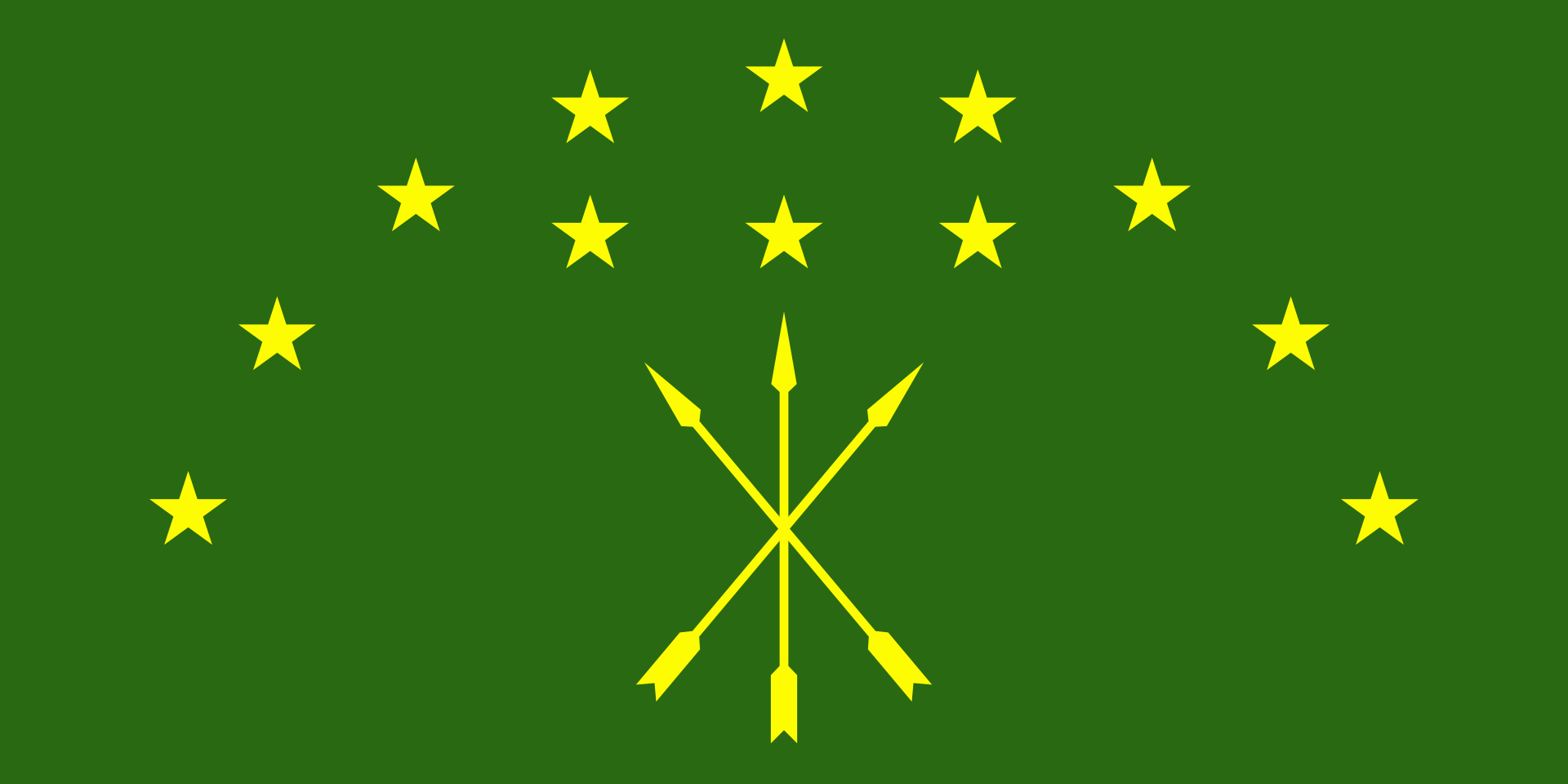
The Circassian flag, green with twelve gold stars and three crossed arrows, became the official flag of the Republic of Adygea by a law of 24 March 1992. 25 April is Adygea’s Flag Day, and Circassians around the world mark it as Circassian Flag Day.
Maykop, the capital
Maykop is Мыекъуапэ in Adyghe. The name is usually explained from the name of a river: мие, apple tree, and ко, valley, with пе, mouth, so “the town at the mouth of the apple valley”. It is the republic’s centre of government, learning and culture, home to its two universities and its National Museum, and the gateway to the mountains of southern Adygea.
Visiting Adygea
For Circassians from the diaspora, a trip to Adygea can mean a great deal: hearing Adyghe spoken, seeing the Circassian flag over government buildings and walking through the National Museum. For everyone, the south is the draw: the Khadzhokh gorge, the Rufabgo waterfalls and the meadows of Lago-Naki, all within reach of Maykop. The nearest big city is Krasnodar.
Why Adygea matters
Adygea is where Adyghe is an official language, where it is studied at university level and where the Circassian flag flies as a state flag. For the Circassian diaspora, staying connected to Adygea is part of keeping the language and culture alive (Habze, who the Circassians are).
Learning the language connects you directly to it. The Adyghe course in the Circassian App teaches West Circassian with audio for words and phrases that you can slow down, the 66-letter alphabet with the sound of each letter, and Кызбеч, an AI tutor who replies in Adyghe.
Free on iPhone & Android
Learn Circassian a few minutes a day
Short Kabardian or Adyghe lessons with audio, an alphabet course and an AI tutor. The first lessons work without an account.

4.9 on the App Store 53,000+ people in 100+ countries
Adygea: questions
Where is Adygea?
In the Northwest Caucasus, in southern Russia. It is an enclave entirely surrounded by Krasnodar Krai, and its capital is Maykop.
How many Circassians live in Adygea?
In the 2021 census the Adyghe were 25.7% of the republic’s 496,934 people; Russians were 64.4%.
What language is spoken in Adygea?
Russian and Adyghe (West Circassian), both official. Adyghe is written in Cyrillic with 66 letters.
What does Maykop mean?
In Adyghe it is Мыекъуапэ, usually explained as “the town at the mouth of the apple valley”.
Is the Circassian flag the flag of Adygea?
Yes. The green flag with twelve stars and three arrows has been the official flag of the Republic of Adygea since 24 March 1992.
What is Adyghe cheese?
A soft fresh cheese, матэкъуае in Adyghe (“basket cheese”). Since 2004 “Adyghe cheese” is a protected appellation of origin of the republic.
Sources
- Wikipedia (English), “Adygea”. en.wikipedia.org/wiki/Adygea
- Wikipedia (English), “Maykop”. en.wikipedia.org/wiki/Maykop
- Wikipedia (English), “Lago-Naki plateau”. en.wikipedia.org/wiki/Lago-Naki_plateau
- Wikipedia (English), “Western Caucasus”. en.wikipedia.org/wiki/Western_Caucasus
- Wikipedia (Russian), «Майкоп». ru.wikipedia.org/wiki/Майкоп
- Wikipedia (Russian), «Хаджохская теснина». ru.wikipedia.org/wiki/Хаджохская_теснина
- Wikipedia (Russian), «Большой Руфабго». ru.wikipedia.org/wiki/Большой_Руфабго
- Wikipedia (Russian), «Нальмэс (ансамбль)». ru.wikipedia.org/wiki/Нальмэс_(ансамбль)
- Wikipedia (Russian), «Адыгейский сыр». ru.wikipedia.org/wiki/Адыгейский_сыр
- ConsultantPlus, legal news on the “Adyghe cheese” appellation of origin. www.consultant.ru/legalnews/11899/
- Flag facts: see the sources on the Circassian flag.
- The Circassian App: audio course lessons 29 and 30 (Kabardian and Adyghe).
Meet Circassians from around the world
Chat with Circassians in Turkey, Jordan, Russia and beyond, and learn Kabardian or Adyghe together in short daily lessons.
Download free53,000+ people in 100+ countries
