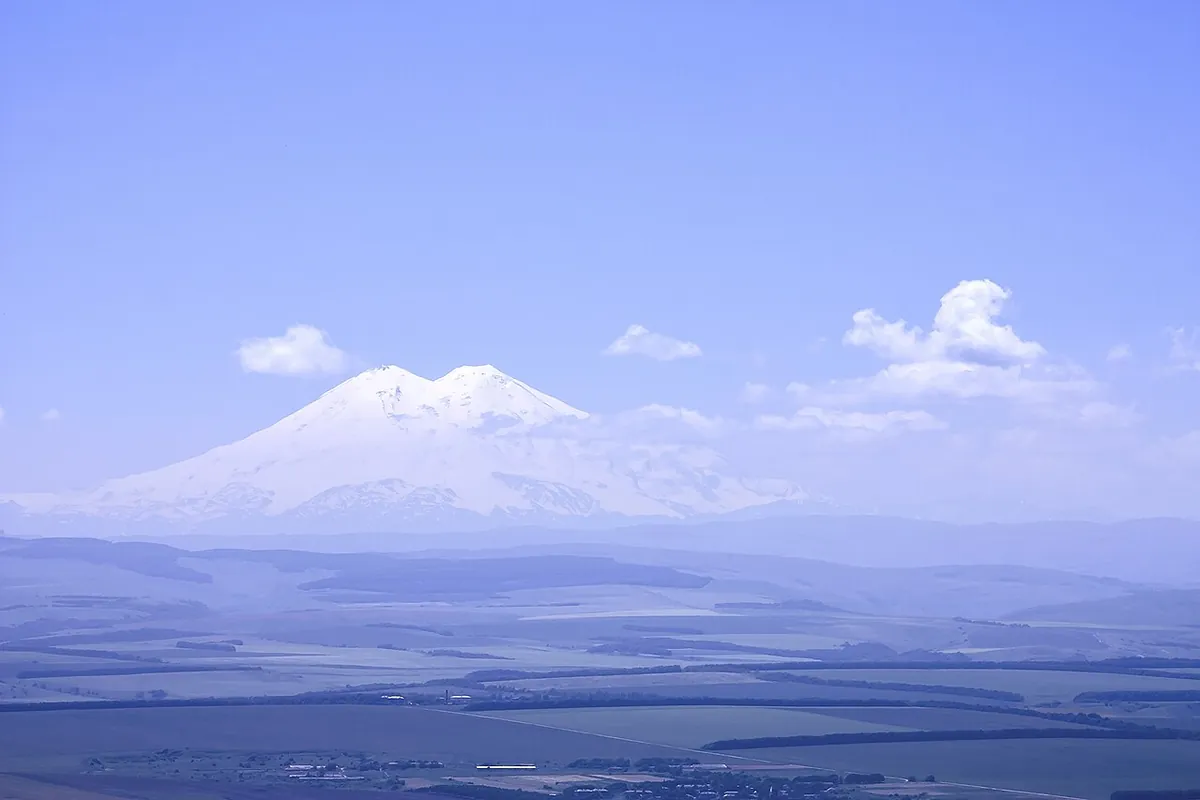
Kabardino-Balkaria is a republic of Russia in the North Caucasus and the homeland of the Kabardians, the eastern Circassians. Of its 904,200 people (2021 census), 57.1% are Kabardians, 19.8% Russians and 13.7% Balkars. Its capital is Nalchik, Налшык in Kabardian, and Mount Elbrus (5,642 m), Europe’s highest peak, rises within its borders. Kabardian is one of its official languages.
If Adygea is the home of the western Circassians, Kabardino-Balkaria is the home of the eastern ones. This Russian republic in the heart of the North Caucasus is where most Kabardians live and where the Kabardian language is official. The Kabardians call their land Къэбэрдей, Kabarda.
Geography
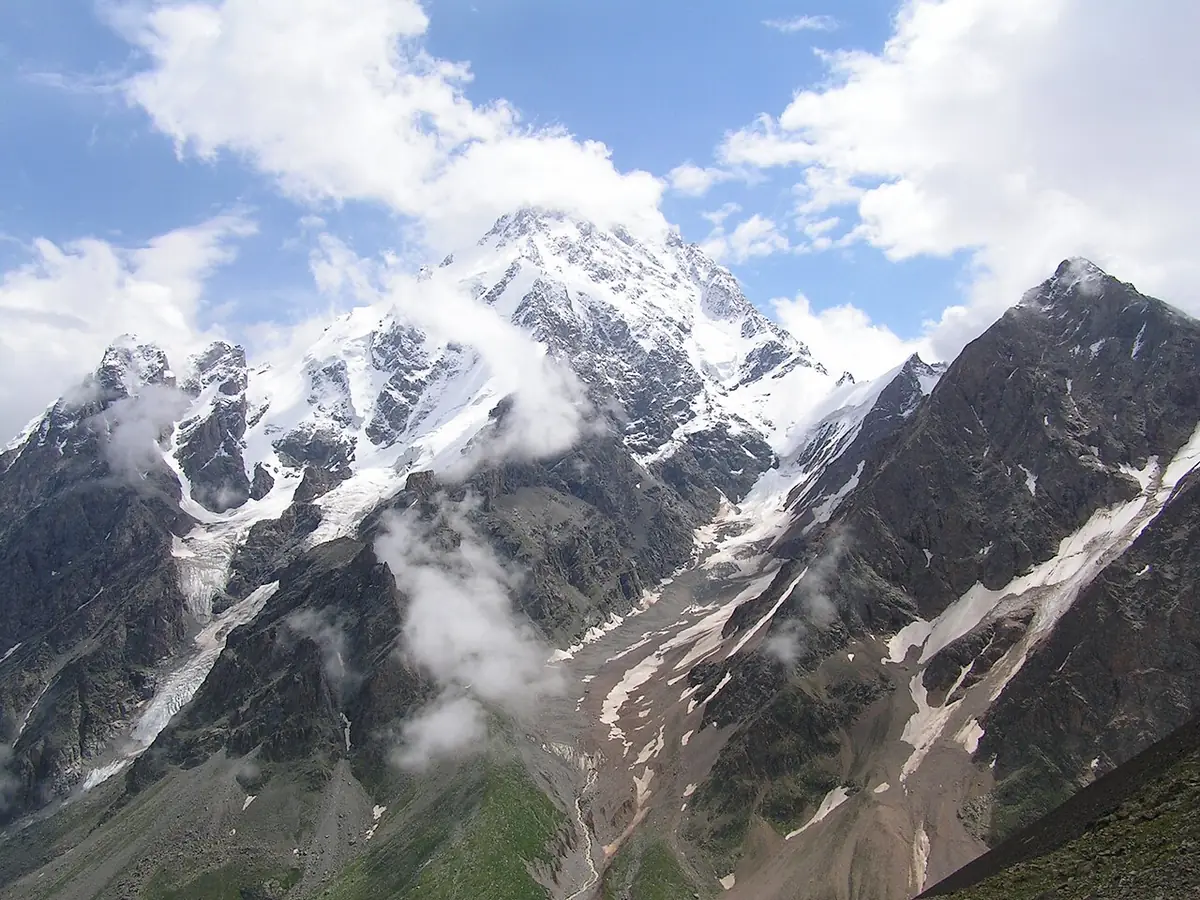
Kabardino-Balkaria covers about 12,500 km², with plains in the north and the high Caucasus in the south. Mount Elbrus, at 5,642 m the highest peak in Europe, Russia and the Caucasus, stands within its borders; its 22 glaciers feed three rivers, the Baksan, the Malka and the Kuban. Other great peaks include Dykh-Tau, at 5,205 m the second-highest mountain in Russia and Europe. The main rivers are the Terek, Malka, Baksan, Chegem and Cherek.
The republic borders Stavropol Krai to the north, North Ossetia-Alania to the east, Karachay-Cherkessia to the west and Georgia to the south. Its capital, Nalchik, lies at the foot of the mountains.
The Kabardian people
Kabardians make up 57.1% of the republic’s 904,200 people (2021 census), followed by Russians (19.8%) and Balkars (13.7%); another 3% are Cherkess. The Kabardians are the eastern branch of the Circassian people and speak Kabardian, also called East Circassian or Kabardian-Circassian, a Northwest Caucasian language with about 1.9 million speakers. The Balkars are a Turkic people with their own language. Since 1922 the two have shared one region, first as the Kabardino-Balkarian Autonomous Oblast and today as the republic.
Kabarda has a long history of its own. In the 16th century the Kabardian ruler Temruqo, known in Russian as Temryuk, allied himself with Tsar Ivan IV, and his daughter Maria Temryukovna was the tsar’s wife from 1561 to 1569. More about the Circassian people in who the Circassians are and what Adyghe means.
Language and culture
Kabardian is an official language of the republic together with Balkar, alongside Russian, and also of neighbouring Karachay-Cherkessia. Nalchik has a Kabardian State Drama Theatre, named after Ali Shogentsukov and founded in 1937, and the Kabardinka State Academic Dance Ensemble, which grew out of an arts studio opened in Nalchik in 1933 and took its present name in 1965. Kabardinka has been decorated by Jordan with the Order of Independence and the Order of the Star of Jordan. More on the dances in Circassian dance and on the music in Circassian music.
Kabarda gave its name to the Kabardian horse, one of the best-known breeds of the Caucasus. Sport is a source of pride too: the judoka Beslan Mudranov, born in Baksan, won Russia’s first gold medal at the 2016 Olympics in Rio.
Kabardian cooking includes лыбжьэ, a stew the Kabardian dictionary calls a national dish, pasta, the stiff millet porridge eaten instead of bread, and Circassian cheese. More in Circassian food.
Nalchik, the capital
Nalchik, Налшык in Kabardian, has 247,054 people (2021 census). Its name means “small horseshoe” in Kabardian and Balkar, from nal, horseshoe. It is a spa town, a resort with sanatoriums known for its mineral waters and mountain air, and the republic’s centre of learning, home to the Kabardino-Balkarian State University and the North Caucasian State Institute of Arts. The National Museum of the Kabardino-Balkarian Republic, founded in 1921, is here too, and Nalchik is the gateway to Elbrus and the mountain valleys.
In the Circassian App’s audio course, Madina, one of its two characters, is from Nalchik. Hear how she says it:
| Meaning | Kabardian | Adyghe |
|---|---|---|
| Where are you from? | Дэнэ ущыщ?Dene ushchyshch? | Тыдэ укъикIырэ?Tyde uqik'yre? |
| I’m from Nalchik. | Сэ Налшыкэм сыщыщ.Se nalshykem syshchyshch. | – |
Kabardino-Balkaria and the diaspora
For Kabardian families abroad, Kabardino-Balkaria is the ancestral homeland. In Turkey, Kabardians are the largest Circassian group, and those of the Uzunyayla plateau have kept the language best (Circassians in Turkey). In Jordan, the Circassian Charity Association gives young Circassians scholarships to study at universities in Kabardino-Balkaria and Adygea (Circassians in Jordan). And in recent years some Circassians from Syria have resettled in the republic, as well as in Adygea and Karachay-Cherkessia. See the Circassian diaspora today.
Mountains, lakes and waterfalls
Mount Elbrus draws climbers and skiers from around the world: a cable car was built in stages from 1959, and today three lifts take visitors up to 3,847 m. Below the mountains, the republic has about a hundred lakes. The best known are the Blue Lakes, five karst lakes in the Cherek valley about 30 km south of Nalchik; the Lower Blue Lake is one of the deepest karst lakes in the world.
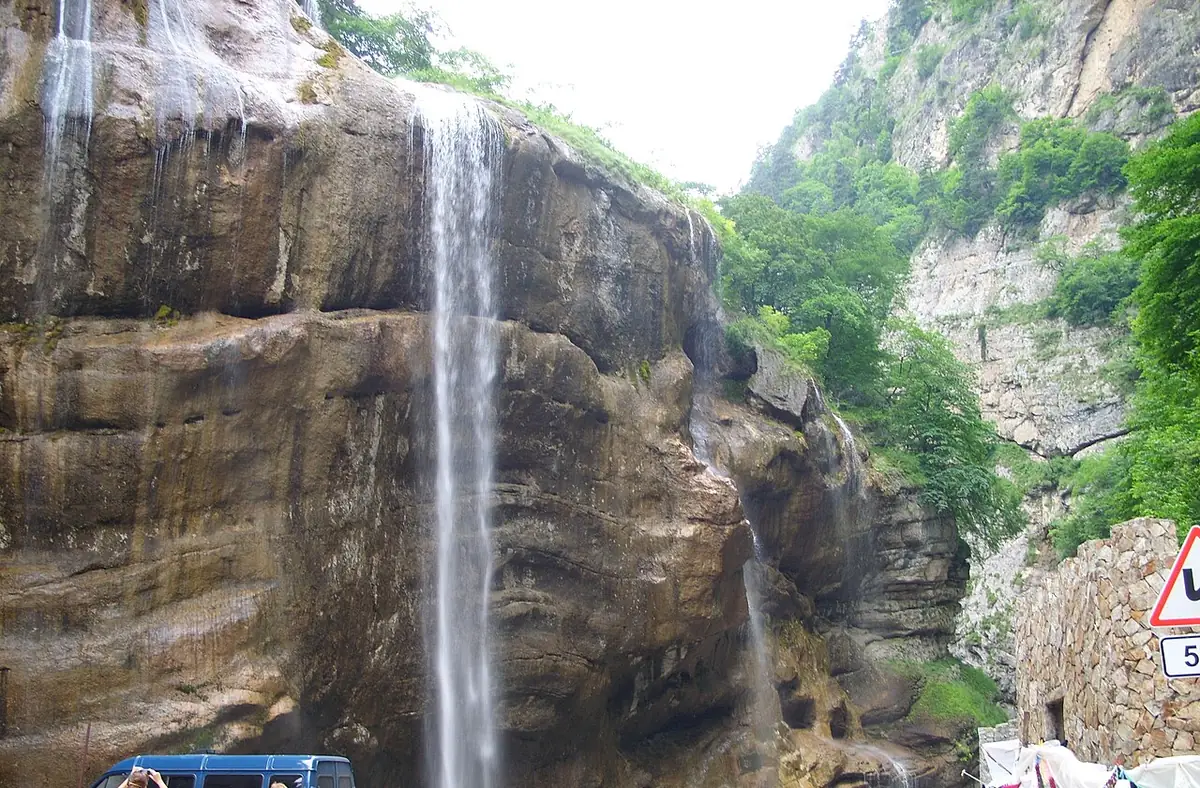
In the Chegem gorge, about 55 km from Nalchik, a group of waterfalls pours down from the cliffs where the gorge narrows to 25 metres.
Add Circassian hospitality and the food, and a trip here is as much about the culture as the mountains.
Why Kabardino-Balkaria matters
With Kabardians the majority and Kabardian an official language, with its own Kabardian theatre and the Kabardinka ensemble, Kabardino-Balkaria is the heartland of East Circassian. For anyone learning Kabardian, this is where the language lives every day (Kabardian vs Adyghe).
The Circassian App’s Kabardian course teaches this language: short lessons with audio, the 60-letter Kabardian alphabet with every letter recorded, and Сэтэней-гуащэ, an AI tutor who replies in Kabardian. Start with how to learn Circassian.
Free on iPhone & Android
Learn Circassian a few minutes a day
Short Kabardian or Adyghe lessons with audio, an alphabet course and an AI tutor. The first lessons work without an account.

4.9 on the App Store 53,000+ people in 100+ countries
Kabardino-Balkaria: questions
Where is Kabardino-Balkaria?
In the North Caucasus, in southern Russia. It borders Stavropol Krai, North Ossetia-Alania, Karachay-Cherkessia and Georgia. Its capital is Nalchik.
Who lives in Kabardino-Balkaria?
In the 2021 census, 904,200 people: Kabardians 57.1%, Russians 19.8%, Balkars 13.7% and Cherkess 3%.
What language do Kabardians speak?
Kabardian (East Circassian), with about 1.9 million speakers. It is official in Kabardino-Balkaria together with Balkar, and in Karachay-Cherkessia.
How do you say Nalchik in Kabardian?
Налшык. The name means “small horseshoe”. “I’m from Nalchik” is Сэ Налшыкэм сыщыщ.
Is Mount Elbrus in Kabardino-Balkaria?
Yes. Elbrus, at 5,642 m the highest mountain in Europe, stands in the republic, and lifts take visitors up to 3,847 m.
How is Kabardian different from Adyghe?
They are the eastern and western forms of Circassian, with different sounds, words and alphabets of 60 and 66 letters. See Kabardian vs Adyghe.
Sources
- Wikipedia (English), “Kabardino-Balkaria”. en.wikipedia.org/wiki/Kabardino-Balkaria
- Wikipedia (English), “Kabardino-Balkarian Autonomous Oblast”. en.wikipedia.org/wiki/Kabardino-Balkarian_Autonomous_Oblast
- Wikipedia (English), “Nalchik”. en.wikipedia.org/wiki/Nalchik
- Wikipedia (English), “Kabardian language”. en.wikipedia.org/wiki/Kabardian_language
- Wikipedia (English), “Mount Elbrus”. en.wikipedia.org/wiki/Mount_Elbrus
- Wikipedia (English), “Dykh-Tau”. en.wikipedia.org/wiki/Dykh-Tau
- Wikipedia (English), “Temruqo the Brave”. en.wikipedia.org/wiki/Temruqo_the_Brave
- Wikipedia (English), “Maria Temryukovna”. en.wikipedia.org/wiki/Maria_Temryukovna
- Wikipedia (English), “Beslan Mudranov”. en.wikipedia.org/wiki/Beslan_Mudranov
- Wikipedia (English), “Circassians in Syria”. en.wikipedia.org/wiki/Circassians_in_Syria
- Wikipedia (Russian), «Кабардинка (ансамбль)». ru.wikipedia.org/wiki/Кабардинка_(ансамбль)
- Wikipedia (Russian), «Кабардинский драматический театр». ru.wikipedia.org/wiki/Кабардинский_драматический_театр
- Wikipedia (Russian), «Национальный музей Кабардино-Балкарской Республики». ru.wikipedia.org/wiki/Национальный_музей_Кабардино-Балкарской_Республи
- Wikipedia (Russian), «Чегемские водопады». ru.wikipedia.org/wiki/Чегемские_водопады
- Wikipedia (Russian), «Голубые озёра (Кабардино-Балкария)». ru.wikipedia.org/wiki/Голубые_озёра_(Кабардино-Балкария)
- Apazhev M. L., Kokov J. N. Kabardian-Circassian-Russian dictionary. Nalchik: Elbrus, 2008, pp. 294, 388, 671, 676.
Meet Circassians from around the world
Chat with Circassians in Turkey, Jordan, Russia and beyond, and learn Kabardian or Adyghe together in short daily lessons.
Download free53,000+ people in 100+ countries
