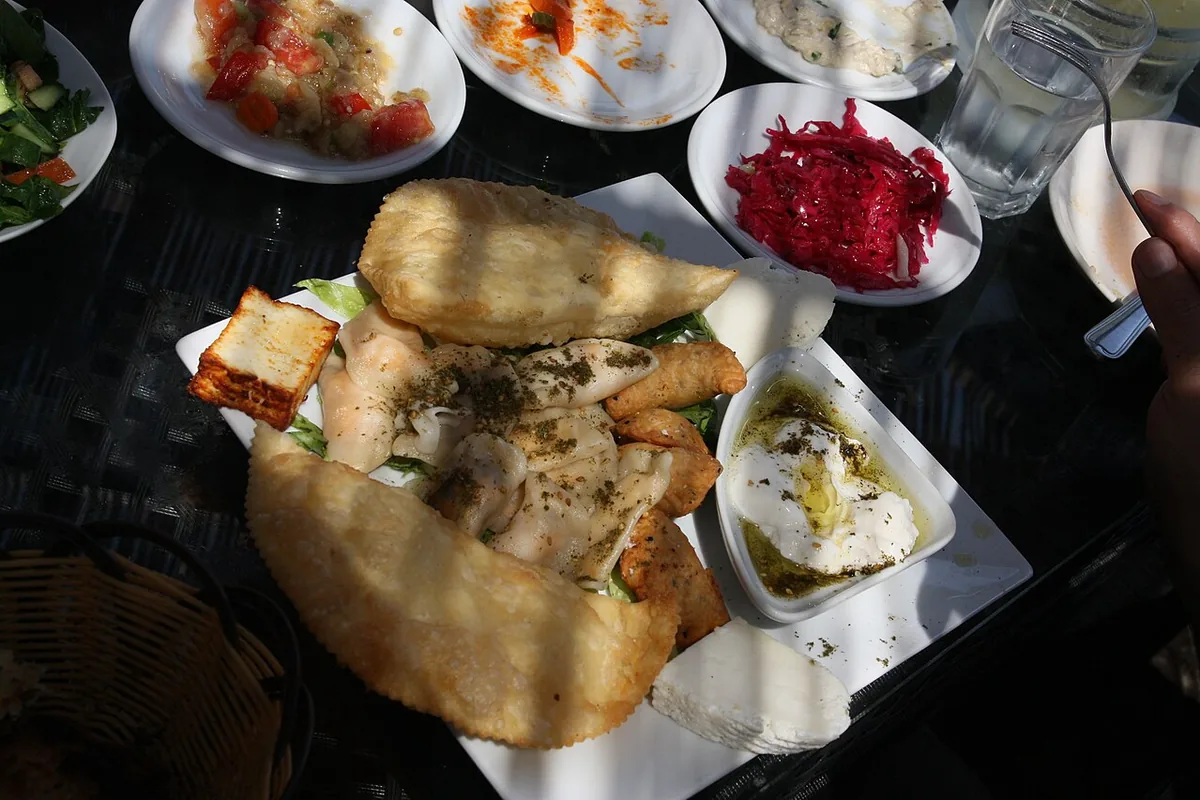
Hospitality is one of the core duties of Habze, the Circassian code of conduct. A guest was traditionally seen as “a messenger from God”: the host served the best he had before asking who the guest was or why he had come, gave him the place of honour and was bound to protect him. Every home kept a guest room ready, and an insult to a guest was an insult to the whole family.
Hospitality is more than a pleasant trait of Circassian culture. It is one of the duties of Habze, the unwritten code of the Adyghe, listed among its teachings alongside protecting the weak, respect for women and loyalty to one’s word. How a family received a guest showed its honour: an insult to a guest was an insult to the host and to his whole family.
The rules of hospitality in Habze
- The guest comes from God. A guest was traditionally considered “a messenger from God”.
- The best, before any questions. The host served the guest the best he could before asking who he was, where he came from or why he had come.
- The place of honour. At the table the guest always sits in the place of honour. In a room, the most honourable seat is the one furthest from the door.
- Everyone stands. Custom says that people stand up when a guest or an elder enters the room.
- Protection. The host was the guest’s protector, and he and his kin were expected to defend the guest’s safety and honour with their lives if need be. The guest house was a sanctuary: even sworn enemies could show no hostility within its walls, and the duty reached even abreks, outlaws.
- A request is not refused. One kind of guest came to ask for something, and turning him away was a great disgrace.
Адыгэ и хьэщIэр быдапIэ исщ.
A Circassian’s guest sits as if in a fortress. (Kabardian proverb) · more proverbs
Close to these rules stood the kunak, a friend and host in a neighbouring district.
Travellers saw the rules at work. The British merchant James Stanislaus Bell, who lived among the Circassians from 1837 to 1839, was lodged on his first day in the guest house of a family that was “not wealthy” but “much respected”. His meals were brought from the family house, and his young host “never eats till I have done”. The same host, Bell found out, had fed and lodged another visitor of whom he knew nothing at all.
The guest room (ХьэщIэщ)
Every Circassian home had a special guest room that was always ready, whether or not anyone was expected. In Kabardian it is хьэщIэщ, in Adyghe хьакIэщ, and in Russian the kunatskaya, the room for the kunak. By tradition two carpets hung on its walls, one under the family’s rifles and pistols and the other under its musical instruments. Today the Kabardian хьэщIэщ also means a hotel, and that is how the app’s Kabardian lessons teach it.
The words of a visit, from lesson 29 of the audio course. Tap to hear each one in both dialects:
| Meaning | Kabardian | Adyghe |
|---|---|---|
| guest | хьэщIэh'eshch'e | хьакIэhak'e |
| dear guest (literally “beautiful guest”) | ХьэщIэ дахэ.Heshch'e dakhe. | ХьакIэ дахэ.Hak'e dakhe. |
| the hosts | бысымbysym | бысымbysym |
| a visit | хьэщIапIэheshch'ap'e | – |
| guesting, being a guest | – | хьакIэнhak'en |
| A guest came. | ХьэщIэ къэкIуащ.Heshch'e qek'washch. | ХьакIэ къэкIуагъ.Hak'e qek'wagh. |
Food and hospitality
Feeding the guest is the heart of the custom: the best food goes to the guest, served before any questions. Bell noted that bread and salt were very often the first thing a traveller was offered, and his own host waited to eat until he had finished. Circassian cooking has dishes for such a table, from chicken in walnut sauce to Circassian cheese and haliva, the pastries made on holidays.
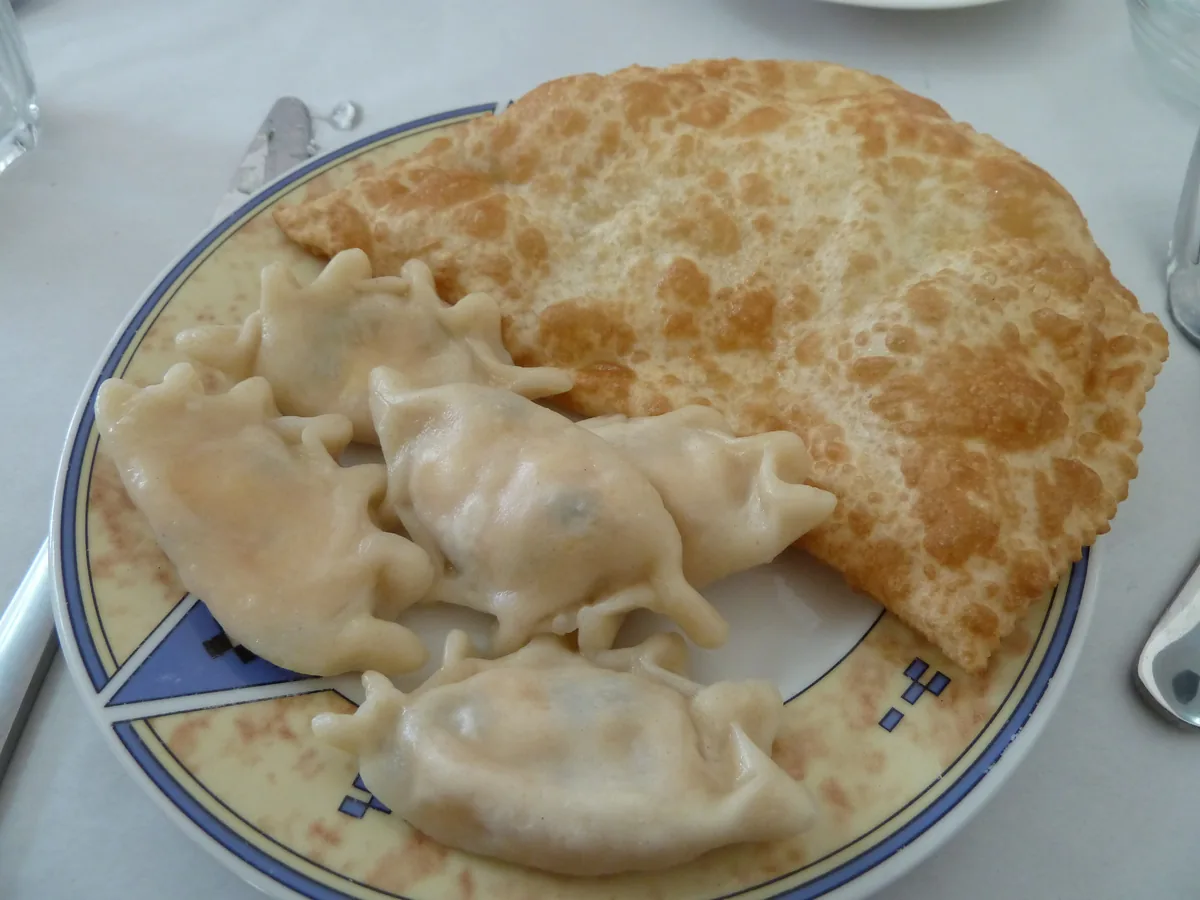
More in Circassian food, the recipes and Circassian table etiquette, where the elder who leads the table sets the order of the meal.
Hospitality in the diaspora
Circassian communities abroad have kept their language and many of their customs: in Syria they kept their language, their tribal heritage and some traditional customs, and in Israel they cultivate their heritage and culture. The photo at the top was taken in Kfar Kama, one of Israel’s two Circassian towns, settled in 1878 by Shapsug families. Its school teaches in Circassian, Hebrew, Arabic and English, and the town has a Circassian Heritage Center.
For a family far from the Caucasus, receiving a guest the Circassian way can be one of the most visible ways to live by Habze at home. Read more about the Circassian diaspora today, Circassians in Turkey, Circassians in Jordan and how families keep the language alive.
How to be a good guest
Guests have duties too. Habze asks the young to stand when an elder enters and not to sit until invited, asks everyone to speak kindly and never to boast, and leaves the seat furthest from the door to the eldest. Many of these rules have been relaxed in modern life. In the audio course, the guest thanks the hosts, praises the house and accepts the tea.
Kabardian · audio lesson 29 · a guest arrives
Adyghe · audio lesson 29 · a guest arrives
How to say it at the door: welcome in Circassian. More everyday phrases: the Circassian phrasebook.
Hospitality and identity
The Kabardian word for hospitality, хьэщIагъэ, is built on the word for guest, хьэщIэ (Adyghe хьакIэ), and the hosts are бысым in both dialects. Like the rest of Habze, hospitality is tied to Adyghaghe, “Circassianity”, the moral ideal reached by living by Habze: see what Adyghe means. Understanding it fully means understanding the language and Habze together.
The Circassian App teaches both. Its Habze course has a unit of four lessons on hospitality, and lesson 29 of the audio course is a guest’s visit from the knock at the door to the cup of tea, in Kabardian and in Adyghe. Start with how to learn Circassian.
Free on iPhone & Android
Circassian language and culture, in one app
Kabardian and Adyghe lessons, Habze culture lessons, a library of books, films and music, and Circassians from around the world to talk to.

4.9 on the App Store 53,000+ people in 100+ countries
Circassian hospitality: questions
Why are guests sacred in Circassian culture?
Hospitality is one of the teachings of Habze, the Circassian code of conduct. A guest was traditionally considered a messenger from God, and how a family treated a guest showed its honour.
What is a kunatskaya?
The guest room every Circassian home kept ready: хьэщIэщ in Kabardian, хьакIэщ in Adyghe. Its Russian name comes from the kunak, a friend and host.
What is a kunak?
A friend and host, often in a neighbouring district. The kunatskaya, the guest room, is named after him.
How do you say “guest” in Circassian?
хьэщIэ in Kabardian and хьакIэ in Adyghe. A host greets a “dear guest”: ХьэщIэ дахэ (Kabardian), ХьакIэ дахэ (Adyghe).
How should a guest behave in a Circassian home?
Stand when an elder enters, sit when you are invited, speak kindly and thank the hosts. The eldest takes the seat furthest from the door.
What did James Bell write about Circassian hospitality?
The British merchant, who lived in Circassia from 1837 to 1839, described being lodged in a family’s guest house, a host who would not eat until his guest had finished, and bread and salt as the first refreshment for travellers.
Sources
- Wikipedia (English), “Adyghe Khabze”. en.wikipedia.org/wiki/Adyghe_Khabze
- Wikipedia (English), “Circassians”. en.wikipedia.org/wiki/Circassians
- Wikipedia (English), “James Bell (adventurer)”. en.wikipedia.org/wiki/James_Bell_(adventurer)
- Wikipedia (English), “Circassian cuisine”. en.wikipedia.org/wiki/Circassian_cuisine
- Wikipedia (English), “Kfar Kama”. en.wikipedia.org/wiki/Kfar_Kama
- Wikipedia (English), “Circassians in Syria”. en.wikipedia.org/wiki/Circassians_in_Syria
- Wikipedia (English), “Circassians in Israel”. en.wikipedia.org/wiki/Circassians_in_Israel
- James Stanislaus Bell, Journal of a Residence in Circassia during the years 1837, 1838 and 1839, London, 1840, vol. 1, pp. 25–26. archive.org/details/journalofresiden01belluoft
- The same, vol. 2, p. 220. archive.org/details/journalofresiden02belluoft
- Apazhev M. L., Kokov J. N. Kabardian-Circassian-Russian dictionary. Nalchik: Elbrus, 2008, pp. 52, 546.
- The Circassian App: audio course lesson 29 (Kabardian and Adyghe) and the Habze course unit “Hospitality”.
Want more like this?
The app has 64 short lessons on Circassian traditions, including four on hospitality. Plus a course in Kabardian or Adyghe to learn the language behind them.
Download free53,000+ people in 100+ countries
