Circassian Music: A Complete Guide
The instruments, songs, and traditions that make up the soundtrack of Adyghe culture.
Music is the heartbeat of Circassian culture. It drives the dance, accompanies the celebrations, preserves the legends, and carries the emotions of a people scattered across the world. From the haunting melodies of the Adyghe folk tradition to the energetic rhythms that power Circassian dance, the music is as distinctive as the Circassian language itself. For centuries, it was the primary way that history, values, and identity were transmitted from one generation to the next.
Traditional Circassian Instruments
Shichepshina (Шык1эпщынэ) is the oldest and most traditional Circassian instrument. It is a two-stringed bowed fiddle with a wooden body, typically made from a single piece of wood with a leather soundboard. The shichepshina produces a haunting, nasal tone that is unmistakable. It was traditionally played by a single performer who simultaneously sang epic narratives and accompanied himself. The instrument predates all other known Circassian instruments and represents the deepest, oldest layer of Adyghe musical tradition. Playing the shichepshina was considered a high art, and skilled performers held respected positions in Circassian society.
Pshina (Пшынэ) is the most recognizable Circassian instrument today. It is a type of button accordion (diatonic or chromatic, depending on the period and region) that became central to Circassian music in the 19th century after being introduced from Europe. The pshina quickly displaced the shichepshina as the primary instrument at weddings, festivals, and cultural events because of its louder volume and greater melodic range. Its bright, energetic sound is instantly recognizable to any Circassian. A skilled pshina player can control the entire mood of a gathering, shifting from slow, elegant melodies to explosive dance rhythms.
Pkhachich (Пхъэц1ыч) are wooden clappers used as percussion. Made from hardwood (often boxwood), they consist of several flat pieces strung together. Simple but effective, they provide the rhythmic backbone for many Circassian dance pieces. The pkhachich player typically stands near the dancers and adjusts the tempo in real time. Despite their simplicity, the rhythmic patterns can be complex and require considerable skill.
Kamyl (Къамыл) is a traditional Circassian flute, an end-blown reed instrument that produces a soft, breathy tone. It was used for solo meditative playing and for pastoral music. The kamyl is less common today than the pshina or pkhachich but has seen some revival among musicians interested in the older Adyghe musical traditions.
Shonatl'e (Шонтрыпэ) is a type of drum used in some regional Circassian traditions. While drums were not as central to Adyghe music as stringed instruments and the accordion, percussion instruments appeared in various forms across different subgroups and time periods.
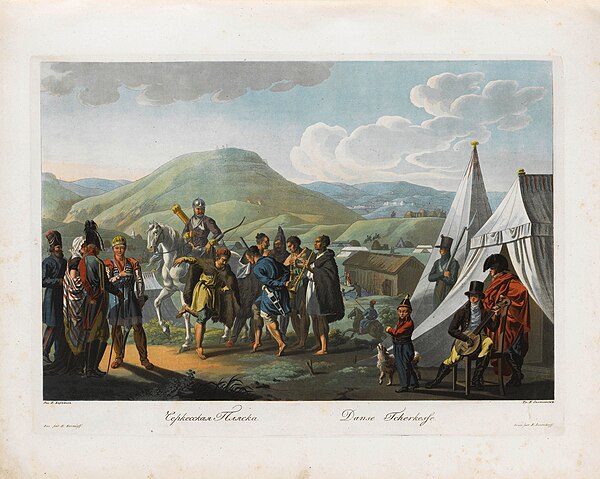
Music and Dance
Circassian music and dance are inseparable. The music dictates the dance style, tempo, and mood. The dance master (джэгуак1уэ) works closely with the musicians to control the flow of the event. Different melodies signal different dances: the slow elegance of the Qafa, the explosive energy of the Zafak, the paired grace of the Islamey. A musician who plays for Circassian dance must know the full repertoire and be able to shift tempo and mood instantly at the dance master's signal.
At a traditional Circassian wedding or джэгу (social gathering with dance), the musician is not a background performer. They are a central figure, alongside the dance master, shaping the entire event. The quality of the music directly affects the quality of the dancing. A great pshina player can elevate a gathering from ordinary to unforgettable, drawing out the best from the dancers and creating an atmosphere of collective joy and cultural pride.
Circassian Folk Songs
The Adyghe folk song tradition is deep and varied. It includes several distinct categories, each with its own style and purpose:
Hero songs (л1ыхъужь уэрэдхэр) are epic narrative songs about warriors, battles, and legendary figures. Many reference characters from the Nart sagas, the ancient Circassian mythology that predates Islam. These songs were traditionally performed by a singer accompanying himself on the shichepshina and could be long, detailed narratives that preserved historical events before written records existed.
Praise songs (хъуэхъу) are performed at weddings, celebrations, and formal gatherings. They invoke blessings on the couple, honor families, and reinforce Habze values. The praise singer (хъуэхъуак1уэ) holds a respected cultural role. A good praise song is not generic well-wishing but a specific, clever composition that references the families involved and their virtues.
Love songs and lyric songs express personal emotion and are often performed by women as well as men. These tend to be melodically beautiful and poetically sophisticated, using metaphor and imagery drawn from the Caucasus landscape.
Work songs and lullabies accompanied daily life. Songs for grinding grain, spinning wool, and rocking children to sleep carried the language and cultural knowledge into the most intimate corners of family life. Many Circassian children in the diaspora first heard the Adyghe language through lullabies sung by their grandmothers.
The Nart Sagas in Music
The Nart sagas are the foundational mythology of the Circassian people, shared (in different versions) with other North Caucasus peoples. These epic stories feature heroes like Sosriquo (born from stone), the wise woman Seteney, and the strongman Pataraz. For centuries, the Nart stories were transmitted primarily through song and oral recitation. Musical performance of the Nart sagas was considered one of the highest forms of Adyghe art. While full epic performances are rare today, elements of the Nart tradition continue to appear in Circassian music and cultural events.
Modern Circassian Music
Today, Circassian musicians blend traditional melodies with modern production. Pop, rock, folk-fusion, and electronic artists of Circassian descent in Turkey, Russia, and the diaspora create music that bridges the old and new. Some sing in the Circassian language, helping expose younger generations to the sound of their ancestral tongue through a medium they already engage with.
In the Caucasus, musicians in Kabardino-Balkaria and Adygea continue to produce music in Kabardian and Adyghe. Some artists have gained significant followings on YouTube and streaming platforms, reaching listeners across the entire Circassian diaspora. The internet has been transformative for Circassian music: a song recorded in Nalchik can reach a young Circassian in Istanbul, Amman, or New Jersey within hours of release.
Music festivals celebrating Circassian heritage take place in various countries. These events bring together musicians from different diaspora communities and the homeland, creating collaborations that would have been impossible a generation ago.
"Circassian music is not just entertainment. It is the living memory of a people."
Understanding Circassian music starts with understanding the language. Song lyrics, praise chants, and dance calls are all in Adyghe and Kabardian. Learning the Circassian language unlocks the full meaning of the music and its deep connection to Habze and cultural identity.
Start Learning Circassian
2,000+ words, native speaker audio, Habze culture lessons, and a full alphabet course. Available in English, Russian, and Turkish.
Get the App