Famous Circassians Throughout History
Notable Adyghe people who shaped the world, from warriors and royals to athletes and artists.
The Circassian people have had an outsized impact on history relative to their numbers. From founding dynasties in Egypt to producing some of the finest warriors the world has ever seen, the Adyghe people have left their mark across centuries and continents. Here are some of the most notable Circassians throughout history.
The Mamluk Sultans
Perhaps the most remarkable chapter in Circassian history is the Mamluk Sultanate. From 1382 to 1517, Circassian Mamluks ruled Egypt, Syria, and much of the Middle East. These were Adyghe warriors originally brought to Egypt as military slaves (mamluks) who rose through the ranks of the military until they controlled the state itself.
Sultan Barquq (Баркъыкъ, ruled 1382-1399) was the first Circassian Mamluk sultan of Egypt, establishing the Burji (Tower) dynasty. He came from a Circassian family, was enslaved as a youth, and rose to power through military skill and political acumen. Under the Burji dynasty, Cairo was one of the wealthiest and most culturally significant cities in the world. The Circassian Mamluks built mosques, schools, and hospitals that still stand in Cairo today.
Sultan Qaitbay (ruled 1468-1496) is considered one of the greatest Circassian Mamluk sultans. His citadel in Alexandria (built on the site of the ancient Lighthouse, one of the Seven Wonders) remains a landmark. Under Qaitbay, the Mamluk state maintained its power and cultural patronage. The Circassian Mamluk period produced remarkable architecture, scholarship, and military innovation.
The Burji dynasty ruled for 135 years until the Ottoman conquest in 1517. It remains one of the most striking examples in history of a small ethnic group from the Caucasus achieving supreme power far from their homeland.
Inal the Great (Инал Нэху)
Inal the Great is a foundational figure in Circassian history, credited with unifying the Adyghe tribes in the 15th century. His rule is remembered as a golden age of Circassian political unity. The Inal dynasty that descended from him produced princes who ruled various Circassian territories for generations. Many Kabardian noble families trace their lineage to Inal, and his name remains one of the most common traditional Circassian names.
Temryuk Idarovich and Maria Temryukovna
Temryuk Idarovich was a Kabardian prince in the 16th century whose political decisions shaped the relationship between the Circassians and Russia. His daughter, Kuchenei (baptized Maria Temryukovna), became the second wife of Ivan the Terrible, Tsar of Russia, in 1561. This marriage cemented a political alliance between the Kabardian principality and the Russian state. It was a calculated diplomatic move by Temryuk, who sought Russian support against rival Caucasus powers. The marriage made Temryuk's family one of the most powerful in the region and marked one of the most significant moments in Circassian-Russian diplomatic history.
Sheikh Mansur (1760-1794)
Born Ushurma in a Circassian village in Chechnya (his exact ethnic background is debated, but he operated primarily among North Caucasus peoples including Circassians), Sheikh Mansur was one of the first leaders to unite North Caucasus peoples against Russian expansion. He led a resistance movement in the 1780s and 1790s that inflicted several defeats on the Russian army. He was eventually captured and died in Russian imprisonment. Sheikh Mansur is regarded as a pioneering figure in Caucasus resistance history.
Circassians in the Ottoman Empire
The Ottoman Empire had deep connections to the Circassian people. Many Adyghe served as elite soldiers, administrators, and members of the imperial household. Several Ottoman queens and valide sultans (queen mothers) were of Circassian origin, including Pertevniyal Sultan (mother of Sultan Abdülaziz) and several consorts of earlier sultans. Circassian influence in the Ottoman court was significant for centuries, and many prominent Ottoman military commanders were of Adyghe descent.
Çerkes Ethem (1886-1949)
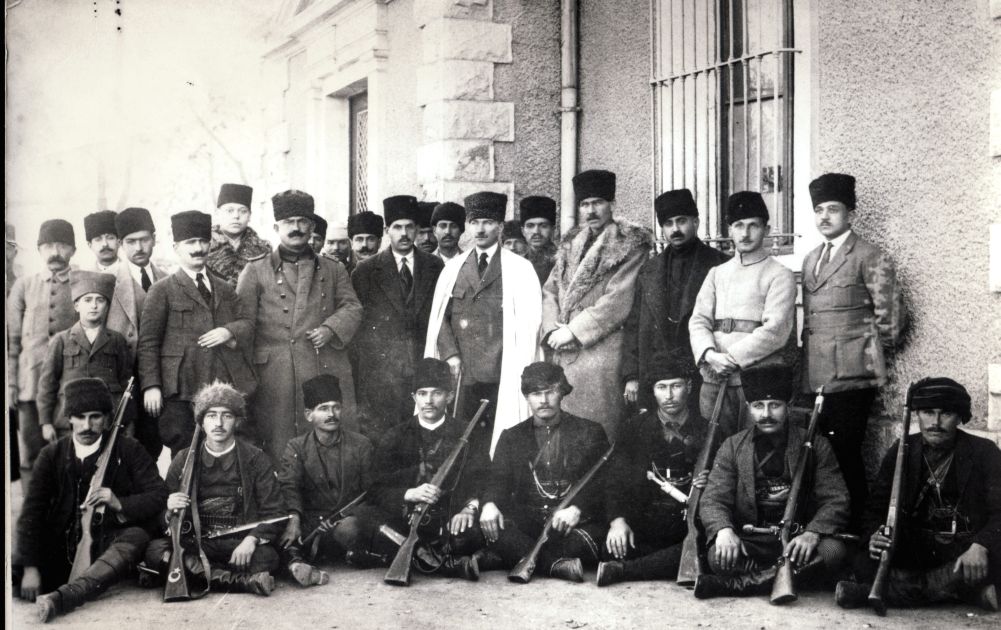
Çerkes Ethem was a Circassian guerrilla commander who played a significant role in the early stages of the Turkish War of Independence (1919-1923). His irregular forces fought against occupying Greek armies in western Anatolia and scored important early victories. However, he later clashed with Mustafa Kemal Atatürk's central command and was declared a rebel. He spent the rest of his life in exile. Despite his controversial end, Ethem remains a significant figure in both Turkish and Circassian history, representing the substantial Adyghe contribution to the founding of modern Turkey.
King Abdullah I of Jordan
While not Circassian himself, King Abdullah I of Jordan had Circassian bodyguards, a tradition that continues to this day. The Circassian Royal Guard is one of the most visible symbols of the Circassian community in Jordan. Circassians have served in senior government and military positions in Jordan since the country's founding.
Modern Circassian Athletes
Circassians have excelled in sports, particularly in wrestling, martial arts, and football. The warrior culture and physical disciplines of Habze created a strong athletic tradition. Adyghe athletes from Kabardino-Balkaria and Adygea have represented Russia in international competitions, winning medals at the Olympics and World Championships in wrestling, boxing, and other combat sports.
In Turkey, many professional athletes of Circassian descent compete at the highest levels of football and basketball. Their heritage is a source of pride for the Circassian diaspora. In Jordan, Circassians have been prominent in the military and security services, reflecting the community's tradition of martial skill and discipline.
Circassians in Arts and Literature
The literary and artistic contributions of Circassians are significant. Ali Shogentsukov (1900-1941) is considered the founder of Kabardian literature, creating the first novels and poems in the Kabardian language. Tembora Kerashev (1902-1988) was a pioneering Adyghe novelist. Iskhaq Mashbash (born 1930) is a prominent Adyghe writer whose historical novels about Circassian history have been translated into multiple languages.
In music, Circassian performers and composers have created works that bridge traditional Adyghe folk music and modern genres. Dance ensembles like the Kabardinka (Kabardino-Balkaria) and Nalmés (Adygea) have performed internationally, showcasing Circassian dance to global audiences.
Why This Matters
The achievements of famous Circassians demonstrate the resilience and talent of the Adyghe people. From ruling empires to preserving a language at risk, Circassians have consistently punched above their weight in world history.
Understanding these stories starts with understanding the culture and language that produced them. The Circassian language carries the words, values, and worldview that shaped these remarkable individuals. Learning it connects you to that legacy.
Start Learning Circassian
2,000+ words, native speaker audio, Habze culture lessons, and a full alphabet course. Available in English, Russian, and Turkish.
Get the App