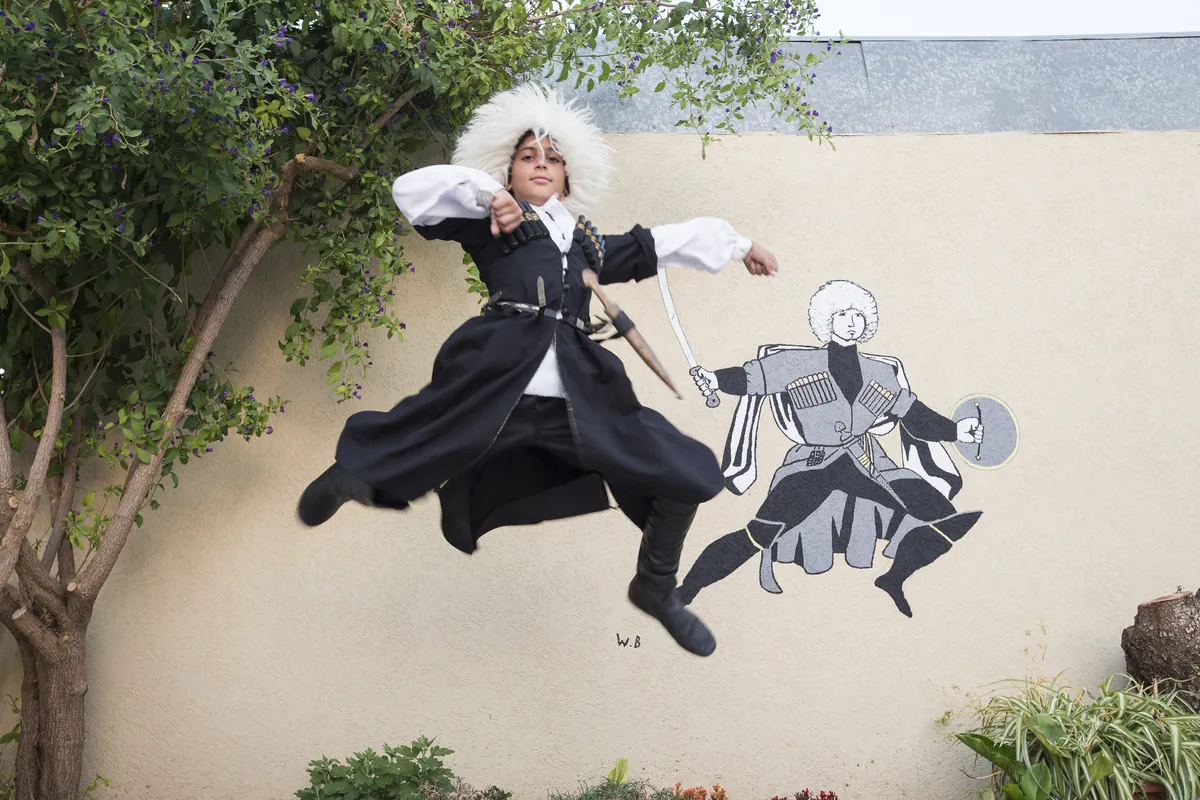
Islamey is the fast Circassian dance, a “dance-play” that began as a pair dance for lovers. Its movements stand for an eagle and a she-eagle, and men often rise onto the tips of their toes. Its melody inspired Mily Balakirev’s piano fantasy Islamey (1869).
The three main Circassian dances: Wuj · Qafa · Islamey. More: the guide to Circassian dance.
What Islamey is
Islamey is the fast one of the three main kinds of Circassian dance, a “dance-play” that historically began as a pair dance for lovers. Its name is said to come from a Kabardian village. The movements are full of symbols: they stand for an eagle and a she-eagle. In every form the dancers move around each other counter-clockwise, and male dancers traditionally roll up their sleeves before they start, a sign of the energy to come.
Dancing on the toes
The high point of Circassian dance technique is dancing on the tips of the toes, and it is used most of all in the Islamey. Nineteenth-century authors also used the name Islamey for the old competition dances: one dancer would leap into the middle of the circle and others would follow, and some records describe toe-dancing contests between young men and women that lasted up to thirty minutes. The movements borrow from war and nature: dodging a sword stroke, the gait of a horse, the flight of an eagle.
Kabardian and Bzhedug Islamey
The Kabardian Islamey, from Eastern Kabardia, is a stately, lyrical story of a couple. The tempo changes with the mood between the partners, both have solo parts, and the man often rises onto his toes to show protection and skill. The Bzhedug Islamey, from Western Circassia (Adygea), is much faster and keeps a steady tempo; rising onto the toes is used sparingly, as an accent, and the patterns are broader and quicker.
Balakirev’s Islamey
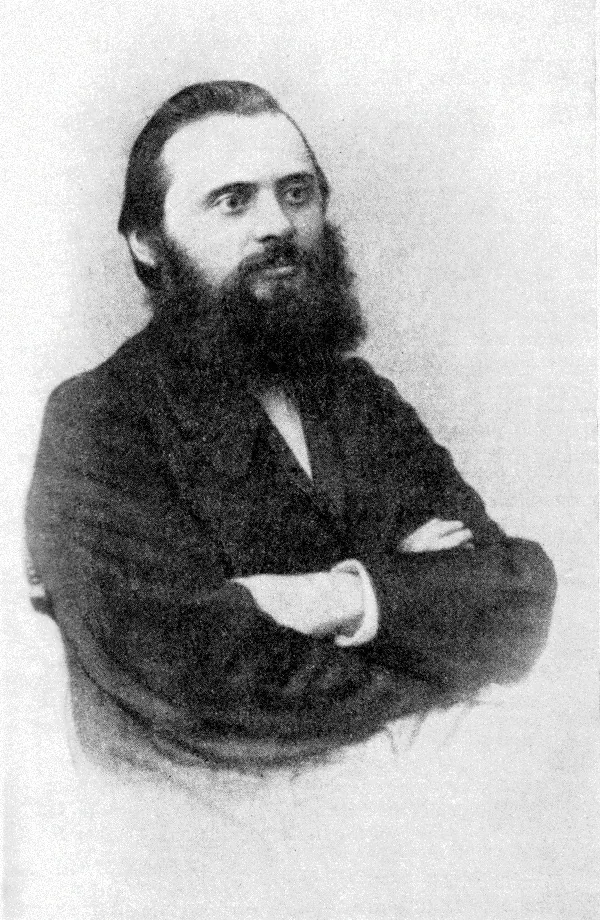
In 1869, after a journey to the Caucasus, the Russian composer Mily Balakirev wrote that a Circassian prince had often visited him and played folk tunes on an instrument rather like a violin. One of them, a dance tune called Islamey, pleased him so much that he arranged it for the piano. The result, Islamey: Oriental Fantasy, was composed in about a month and premiered by Nikolai Rubinstein. It was long considered one of the hardest piano pieces ever written; Maurice Ravel even said he wanted his own Scarbo to be more difficult than Balakirev’s Islamey.
The Islamey is still danced at Circassian weddings and festivals worldwide. In the United States, Circassian families dance it at weddings and cultural events along with the Wuj and the Qafa.
Free on iPhone & Android
Circassian language and culture, in one app
Kabardian and Adyghe lessons, Habze culture lessons, a library of books, films and music, and Circassians from around the world to talk to.

4.9 on the App Store 50,000+ people in 100+ countries
Islamey: questions
What is the Islamey dance?
The fast Circassian dance, a “dance-play” that began as a pair dance for lovers, with movements that stand for an eagle and a she-eagle.
Do men dance on their toes in the Islamey?
Yes. Dancing on the tips of the toes is the high point of Circassian dance technique, and it is used most in the Islamey.
What is the difference between the Kabardian and Bzhedug Islamey?
The Kabardian form is stately and lyrical, with a changing tempo and frequent rising onto the toes; the Bzhedug form from Adygea is faster and steadier, with the toes used only as an accent.
Is Balakirev’s Islamey based on a Circassian dance?
Yes. Balakirev wrote that its main theme was a dance tune called Islamey that a Circassian prince played for him. He composed the piano fantasy in 1869.
What are the other main Circassian dances?
The circle dance Wuj and the slow couple dance Qafa.
Sources
- Wikipedia (English), “Circassian dance”. en.wikipedia.org/wiki/Circassian_dance
- Wikipedia (English), “Islamey” (Balakirev). en.wikipedia.org/wiki/Islamey
- Wikipedia (English), “Circassian Americans”. en.wikipedia.org/wiki/Circassian_Americans
Want more like this?
The app has 64 short lessons on Circassian traditions, including four on music and dance. Plus a course in Kabardian or Adyghe to learn the language behind them.
Download free50,000+ people in 100+ countries
