From 1382 to 1517 the Mamluk Sultanate, which ruled Egypt, the Levant and the Hejaz from Cairo, was led by sultans who were mostly of Circassian origin. Historians call this period the Burji or Circassian Mamluk era, and writers of the time called the state Dawlat al-Jarakisa, “the State of the Circassians”.
Who the Mamluks were
A mamluk was a freed slave soldier. Young men were bought abroad, brought to Cairo, trained as cavalry and freed, and the most powerful of them could become emir or even sultan. A sultan usually named his son to succeed him, but the son rarely lasted more than a few years before a senior commander took the throne.
The Mamluk Sultanate began in 1250. Its first period, the Bahri era, was dominated by mamluks of Kipchak Turkic origin. Already under Sultan Qalawun (1279–1290) many Circassians were bought and formed a regiment called the Burjiyya. The name comes from burj, “tower”: these mamluks lived in the barracks of the Citadel of Cairo. In 1382 one of them took the throne, and for the next 135 years most of the ruling Mamluks were Circassians from the northern Caucasus.
Barquq, the founder
Barquq was born around 1336 in Circassia to a Christian father. He was brought to Egypt and around 1363–64 became a mamluk in the household of the emir Yalbugha al-Umari. In November 1382 he deposed the boy sultan al-Salih Hajji and took the throne. A revolt drove him out in 1389, but he was back in Cairo in 1390 and ruled until his death in 1399.
One detail stands out in the sources. In 1381 Barquq brought his father to Egypt. The father converted to Islam, took the name Anas and was raised to the highest military rank. As sultan, Barquq recruited Circassians on a large scale, an estimated 5,000 of them.
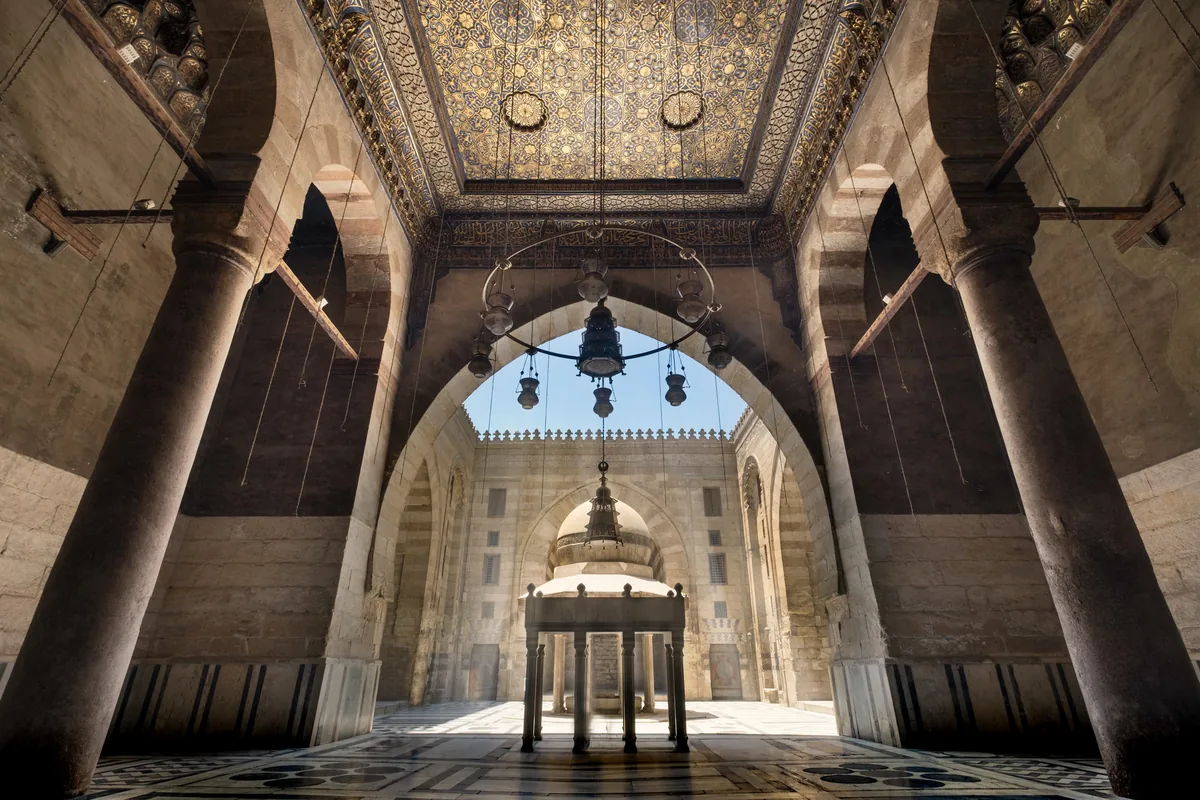
His great complex on al-Muizz street, a mosque, madrasa and Sufi lodge built in 1384–1386, is part of one of the greatest groups of Mamluk architecture in Cairo, beside the complexes of Qalawun and al-Nasir Muhammad. Barquq himself was buried in the desert cemetery north of the city, in the complex his son Faraj completed in 1410–1411.
Qaitbay, the builder
Qaitbay was born between 1416 and 1418 in Circassia and was known for his skill in archery and horsemanship. He was taken to Cairo around 1440, bought by Sultan Barsbay (himself Circassian by birth) and later freed by Sultan Jaqmaq. He rose through the ranks to command the whole army and became sultan in 1468.
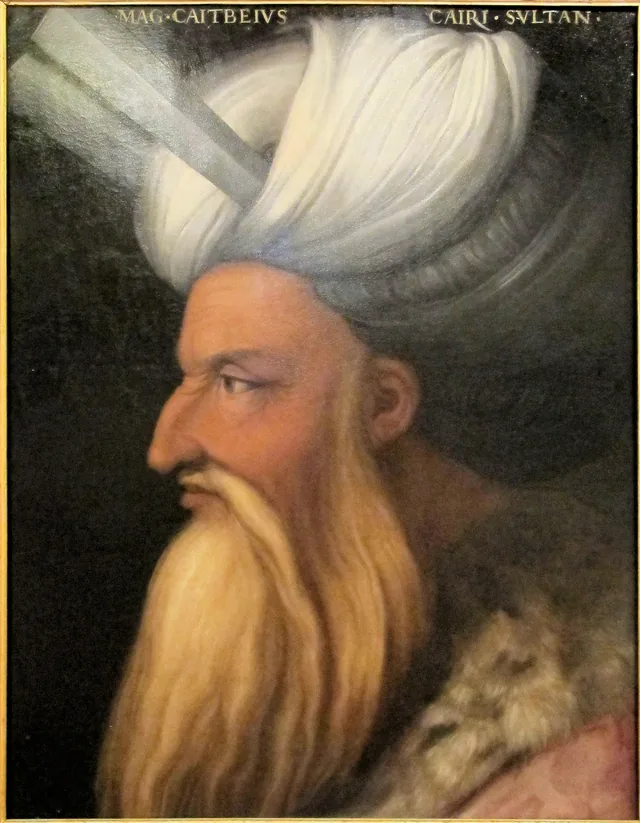
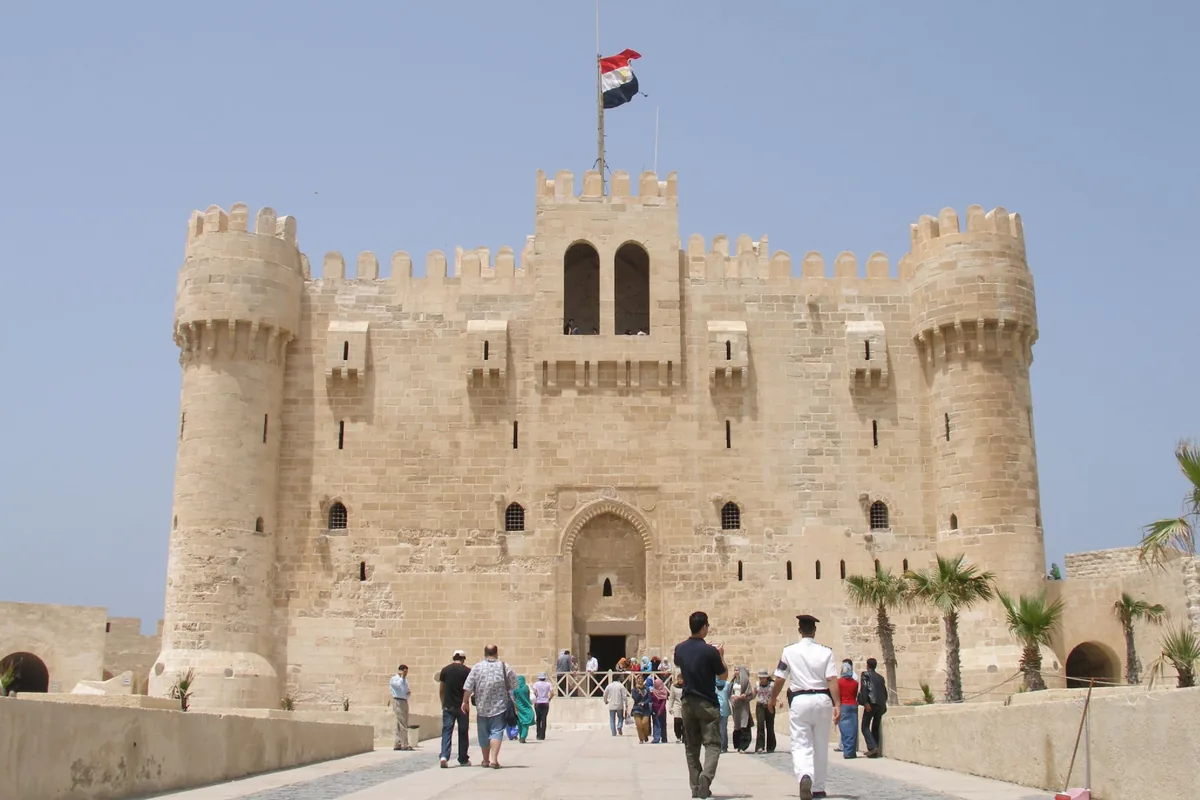
He ruled for nearly 29 years, the second-longest reign of any Mamluk sultan of Egypt, and is remembered above all as a builder. At least 230 monuments are linked to his reign. He built the fortress on the site of the ancient Lighthouse of Alexandria (1477–1479), a madrasa in Mecca, rebuilt a fountain in Jerusalem, and after a fire in 1481 he paid for the renewal of the Prophet’s Mosque in Medina. His funerary complex in Cairo’s Northern Cemetery, built in 1470–1474, is pictured today on Egypt’s one-pound note.
The last sultans
Qansuh al-Ghuri, a mamluk bought by Qaitbay, came to power in 1501. He cast cannon on a scale never seen before in the sultanate and built a great complex on al-Muizz street (1503–1505). In 1516 he led his army north against the Ottoman sultan Selim I and died at the Battle of Marj Dabiq, near Aleppo.
His successor, Tuman Bay II, was a Circassian. In January 1517 the Ottomans took Cairo; Tuman Bay II fought on until he was captured in April, and with that the Mamluk Sultanate came to an end. Tuman Bay II was the last man to carry the title Sultan of Egypt until 1914. The mamluks themselves remained a powerful class in Ottoman Egypt for three more centuries, until Muhammad Ali Pasha ended their power in the early 1800s.
Language and identity
Some Circassian Mamluks could speak Circassian, the language of their childhood. In Egypt they learned Kipchak Turkish, the spoken language of the mamluk class, and the state wrote in Classical Arabic. To the Arabic-speaking population they were simply “Turks”, yet the elite of the Burji period seems to have been proud of its Circassian origins.
The Burji era was a Circassian age, not a closed one. Sultan Khushqadam (1461–1467) was of Greek origin, and Russian Wikipedia names Abkhaz, Armenians and others among the Mamluks of this period.
Monuments you can visit
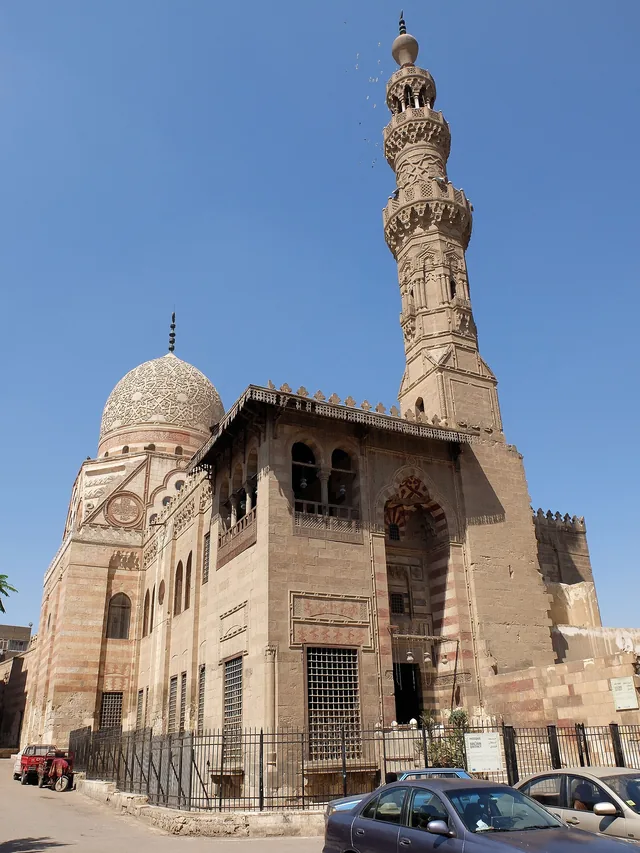
- Citadel of Qaitbay, Alexandria: the fortress on the site of the ancient lighthouse, 1477–1479.
- Funerary complex of Sultan Qaitbay, Northern Cemetery, Cairo: 1470–1474, the building on the one-pound note.
- Complex of Sultan Barquq, al-Muizz street, Cairo: 1384–1386.
- Khanqah of Faraj ibn Barquq, Northern Cemetery, Cairo: completed 1410–1411, where Barquq is buried.
- Sultan al-Ghuri Complex, al-Muizz street, Cairo: 1503–1505; the mausoleum side is open to visitors.
- Fountain of Qaitbay, Jerusalem: renewed by Qaitbay in 1482.
Want the bigger picture? Read who the Circassians are, the Circassian warrior tradition, or the story of the Ubykh language.
Free on iPhone & Android
Circassian language and culture, in one app
Kabardian and Adyghe lessons, Habze culture lessons, a library of books, films and music, and Circassians from around the world to talk to.

4.9 on the App Store 50,000+ people in 100+ countries
Circassian Mamluks: questions
Were the Mamluk sultans Circassian?
From 1382 to 1517, mostly yes: this is the Burji or Circassian Mamluk period. Not every sultan was Circassian (Khushqadam was of Greek origin), and before 1382 the ruling mamluks were mostly of Kipchak Turkic origin.
Who founded the Circassian Mamluk line?
Barquq, born in Circassia to a Christian father, who became sultan in November 1382 and ruled, with a break in 1389–1390, until 1399.
What does “Burji” mean?
“Of the tower”. The Circassian mamluks lived in the tower barracks of the Citadel of Cairo.
What did the Circassian Mamluks build?
Some of the best-known monuments of Cairo and beyond: Barquq’s complex on al-Muizz street, Qaitbay’s funerary complex (on Egypt’s one-pound note), the Citadel of Qaitbay in Alexandria and the al-Ghuri complex, among many others.
How did Circassian Mamluk rule end?
Sultan Qansuh al-Ghuri died at the Battle of Marj Dabiq in 1516, and in January 1517 the Ottomans under Selim I took Cairo. Tuman Bay II, a Circassian and the last Mamluk sultan, was captured in April 1517.
Did the Mamluks speak Circassian?
Some of them could. In Egypt they learned Kipchak Turkish, the spoken language of the mamluk class, and the state wrote in Arabic.
Sources
- Wikipedia (English), “Burji Mamluks”. en.wikipedia.org/wiki/Burji_Mamluks
- Wikipedia (English), “Mamluk Sultanate”. en.wikipedia.org/wiki/Mamluk_Sultanate
- Wikipedia (English), “Barquq”. en.wikipedia.org/wiki/Barquq
- Wikipedia (English), “Funerary complex of Sultan Barquq”. en.wikipedia.org/wiki/Funerary_complex_of_Sultan_Barquq
- Wikipedia (English), “Barsbay”. en.wikipedia.org/wiki/Barsbay
- Wikipedia (English), “Qaitbay”. en.wikipedia.org/wiki/Qaitbay
- Wikipedia (English), “Funerary complex of Sultan Qaytbay”. en.wikipedia.org/wiki/Funerary_complex_of_Sultan_Qaytbay
- Wikipedia (English), “Citadel of Qaitbay”. en.wikipedia.org/wiki/Citadel_of_Qaitbay
- Wikipedia (English), “Sultan al-Ghuri Complex”. en.wikipedia.org/wiki/Sultan_al-Ghuri_Complex
- Wikipedia (English), “Tuman Bay II”. en.wikipedia.org/wiki/Tuman_Bay_II
- Wikipedia (Russian), «Бурджиты». ru.wikipedia.org/wiki/%D0%91%D1%83%D1%80%D0%B4%D0%B6%D0%B8%D1%82%D1%8B
Want more like this?
The app has 64 short lessons on Circassian culture and Habze, plus a course in Kabardian or Adyghe to learn the language behind them.
Download free50,000+ people in 100+ countries
