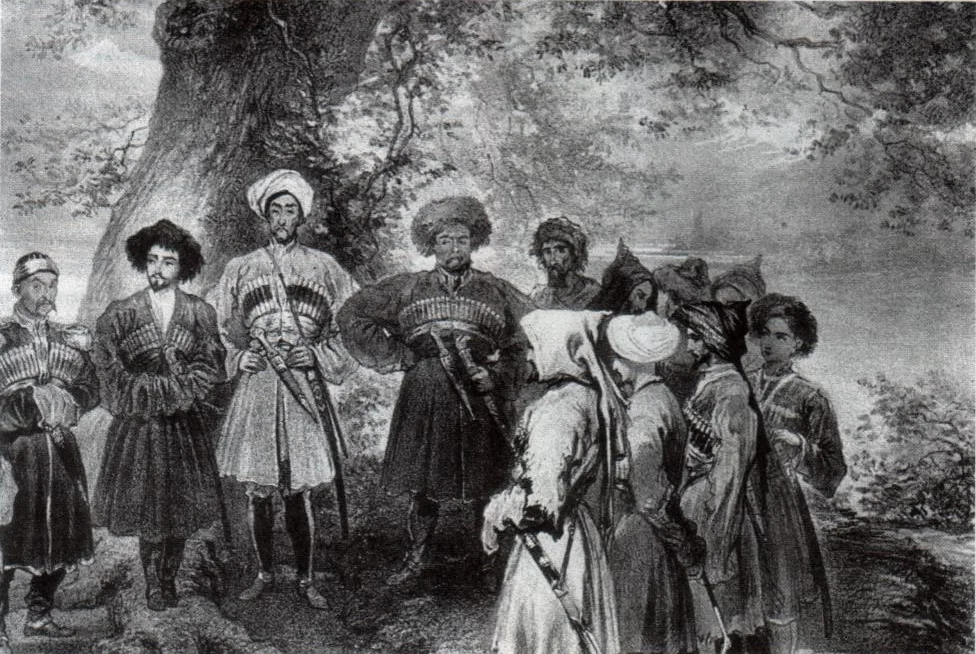
Ubykh was the language of the Ubykh, one of the peoples counted among the Circassian tribes. It belongs to the Northwest Caucasian family and had 84 consonants but only two or three vowels. It died out on 7 October 1992, when its last fluent speaker, Tevfik Esenç, passed away in Turkey.
A language famous for its consonants
Ubykh is known to linguists above all for its sounds. It had 84 distinct consonants, four of which appear only in loanwords, and among them 20 uvular consonants and 29 pure fricatives: more of each, Wikipedia notes, than any other known language. Its vowels are counted differently by different scholars: two in the classic description, three in a later analysis.
The 1996 edition of the Guinness Book of Records listed Ubykh as the language with the most consonant phonemes. Since 2017 the record has gone to !Xóõ, a language of southern Africa with 130 consonants and clicks among them, so Ubykh is now described as having the largest consonant inventory of any language without clicks.
Where Ubykh was spoken
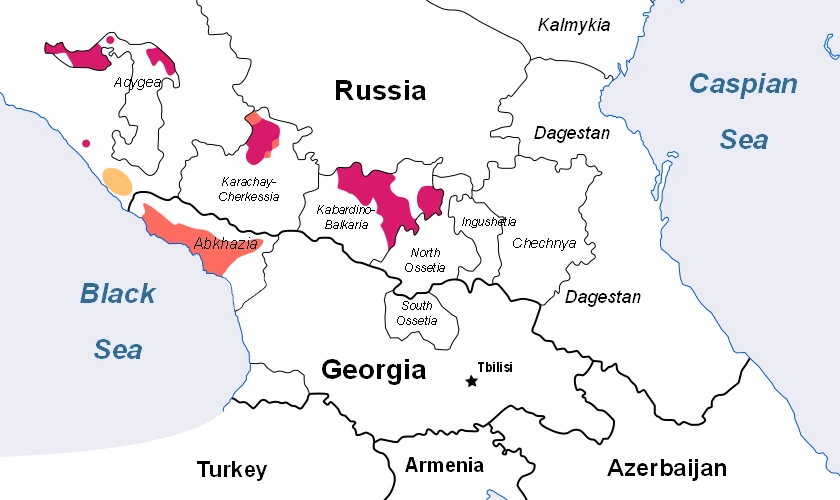
The Ubykh lived on the eastern coast of the Black Sea, around present-day Sochi. In the 1860s, at the end of the Caucasian War, most of them moved to the Ottoman Empire. In Turkey they founded villages such as Hacıosman and Hacıyakup near Manyas (Balıkesir), Maşukiye in Kocaeli and Kırkpınar near Sapanca.
There, the Ubykh lived among other Circassians. Turkish Wikipedia notes that all Ubykhs spoke Adyghe, and some spoke Ubykh as well. Over the generations Ubykh fell out of everyday use, and the descendants of the Ubykh in Turkey speak Turkish and Circassian today.
Tevfik Esenç, the last speaker
Tevfik Esenç (1904–1992) grew up in Hacıosman, where he was raised for a time by grandparents who spoke Ubykh. He served as the village’s muhtar and later took a post in the civil service in Istanbul. He spoke Ubykh, Adyghe and Turkish.
In Istanbul he worked for years with the French linguist Georges Dumézil and his colleague Georges Charachidzé. He had an excellent memory, and he became the main source not only for the language but for Ubykh mythology, history and customs. Dumézil considered his Ubykh the closest thing to a standard form of the language. Esenç died on 7 October 1992 and was buried in Hacıosman; with him, Ubykh ceased to be spoken.
How Ubykh was recorded
Ubykh was never written by its own speakers. What we know comes from linguists who worked with its last speakers before it was too late. In 1930 the Hungarian linguist Julius von Mészáros took notes on Ubykh in Turkey that laid the foundation of its study. Georges Dumézil came the same year to record the language, published a collection of Ubykh tales in 1957 and a full account of its verb in Le Verbe Oubykh (1975). The Norwegian Hans Vogt published a large dictionary in 1963. Georges Charachidzé, George Hewitt and A. Sumru Özsoy also worked with the last speakers.
Dumézil devised a way to write the language down, and Tevfik Esenç eventually learned to write Ubykh in it. Thousands of pages of material and many audio recordings were collected, and a large part of the oral literature was written down, including some cycles of the Nart saga.
Ubykh and the Circassian language
The Northwest Caucasian family has three branches: Circassian (Adyghe and Kabardian), Abkhaz–Abaza, and Ubykh on its own. Ubykh shares features with both of its neighbours, and most of its borrowed words came from Adyghe or Arabic.
Ubykh is gone, but its closest living relatives are not. Adyghe and Kabardian, the two forms of Circassian, are spoken today in the Caucasus, Turkey, Jordan and beyond. Kabardian vs Adyghe explains the difference, and the Circassian alphabet shows how they are written.
Listen to Ubykh
Recordings of Tevfik Esenç speaking Ubykh, with transcriptions, are kept in the Pangloss collection of the CNRS in Paris. The UCLA Phonetics Lab Archive also has Ubykh recordings.
Free on iPhone & Android
Learn Circassian a few minutes a day
Short Kabardian or Adyghe lessons with audio, an alphabet course and an AI tutor. The first lessons work without an account.

4.9 on the App Store 50,000+ people in 100+ countries
Ubykh: questions
How many consonants does Ubykh have?
84, four of which appear only in borrowed words. It has only two or three vowels, depending on the analysis.
Who was the last speaker of Ubykh?
Tevfik Esenç, who died on 7 October 1992 in Turkey. He was buried in his home village of Hacıosman.
Is Ubykh a Circassian language?
Not exactly. It is a separate branch of the Northwest Caucasian family, next to Circassian (Adyghe and Kabardian) and Abkhaz–Abaza. The Ubykh people themselves are counted among the Circassian tribes.
Is Ubykh still spoken?
No. It died out in 1992. Descendants of the Ubykh in Turkey speak Turkish and Circassian.
Where can I hear Ubykh?
In the Pangloss collection of the CNRS (Paris), which keeps recordings of Tevfik Esenç with transcriptions, and in the UCLA Phonetics Lab Archive.
Sources
- Wikipedia (English), “Ubykh language”. en.wikipedia.org/wiki/Ubykh_language
- Wikipedia (English), “Tevfik Esenç”. en.wikipedia.org/wiki/Tevfik_Esen%C3%A7
- Wikipedia (English), “Ubykh people”. en.wikipedia.org/wiki/Ubykh_people
- Wikipedia (Russian), «Убыхский язык». ru.wikipedia.org/wiki/%D0%A3%D0%B1%D1%8B%D1%85%D1%81%D0%BA%D0%B8%D0%B9
- Wikipedia (Turkish), «Ubıhça». tr.wikipedia.org/wiki/Ub%C4%B1h%C3%A7a
- Guinness World Records, “Language with most consonants”. www.guinnessworldrecords.com/world-records/67421-language-with-most-co
- Pangloss collection (CNRS, Paris), Ubykh corpus. pangloss.cnrs.fr/corpus/Ubykh?lang=en
- UCLA Phonetics Lab Archive, Ubykh. archive.phonetics.ucla.edu/Language/UBY/uby.html
Learn Circassian in a few minutes a day
Short lessons in Kabardian or Adyghe. Hear how the words sound, learn to read the alphabet, then practice with an AI tutor who replies in Circassian.
Download free50,000+ people in 100+ countries
