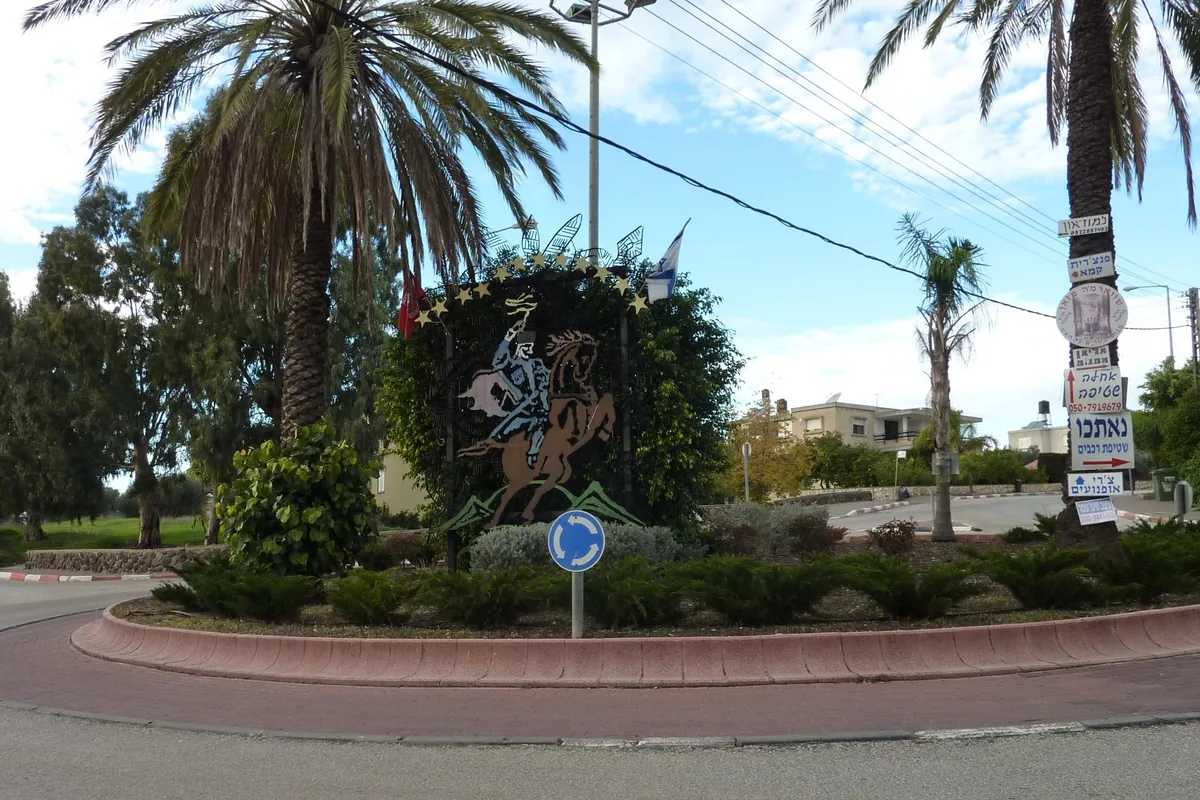
The Nart sagas are the old heroic tales of the North Caucasus. Circassians tell them, and so do the Abkhaz, Abaza, Ossetians, Karachays, Balkars, Chechens and Ingush, each in their own version. They follow the Narts, a race of heroes: Sosruko, born from a stone, Satanaya, the wise mother of the Narts, Tlepsh the smith and many more.
What the Nart sagas are
The Nart sagas exist as prose tales and as epic songs. They are shared by many peoples of the North Caucasus, and separate cycles are also known among the Svans and other Georgian groups and some peoples of Dagestan. The heroes are much the same everywhere, but every people tells them its own way.
The Ossetian versions divide the Narts into three rival clans; the Circassian versions have no such division. In the Abkhaz versions the Narts are one family, the hundred sons of Satanaya. In the Chechen and Ingush tales the Narts are warlike raiders who fight against local heroes. Where the word nart comes from is debated; the most common view links it to an Iranian root meaning “man, hero”.
The linguist John Colarusso and others value the Northwest Caucasian versions (Circassian, Abkhaz–Abaza and Ubykh) because they keep older and odder details, while the Ossetian versions were reworked into a smoother story.
The heroes
Sosruko
Sosruko is the central hero of many cycles. He is the smallest of the Narts, powerful but cunning, and sometimes a trickster. In every version he is born from a stone. In the Circassian tales weapons cannot wound him anywhere but his knees, and his death comes once that secret is learned. In the Circassian tales, too, Sosruko and his mother Satanaya steal fire from a giant, which is why he is often compared with Prometheus.
Satanaya
Satanaya is the mother of the Narts and the wise woman whose advice they seek. In the Circassian and Abkhaz versions she is a symbol of beauty, wisdom and unfading youth. In one tale she bets that she can weave a coat in a single day and asks the sun to slow down so she can finish: that is why the sun lingers at the horizon at sunset. In another she plants a flower from the bank of the Kuban, watches it wither, and learns from the rain how much life depends on water.
Tlepsh
Tlepsh is the smith of the Narts, a master of fire and iron, often close to Satanaya. In one tale he forges the first sickle, learning how to shape it from Lady Isp, the mother of the hero Pataraz. His name is thought to be related to the ancient Greek word for iron, and he is often compared with the Greek smith god Hephaestus.
Badynoko
Badynoko, a hero found only in the Circassian tales, is Sosruko’s cousin and a model of courage. He is the one Nart who does not love feasts and dancing.
The world of the Narts
In the Circassian and Abkhaz tales the Narts came after an age of giants and dwarves, and sometimes still meet them. The Narts are warriors, but the tales honour ploughmen and shepherds just as much, and they speak of respect for women and care for the old and the young. When they are not working or defending their land, the Narts gather for contests in horsemanship, archery, stone throwing and wrestling, and in dance, song, eloquence and wit.
Iron is everywhere, from Tlepsh’s forge to the tools of daily work. And every hero has a horse: a true companion that can speak, and that will not trust its rider until it has tested his courage and loyalty.
How the tales were written down
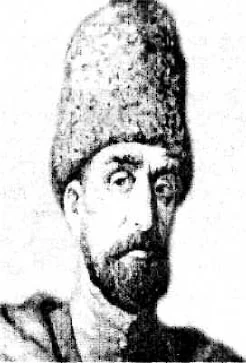
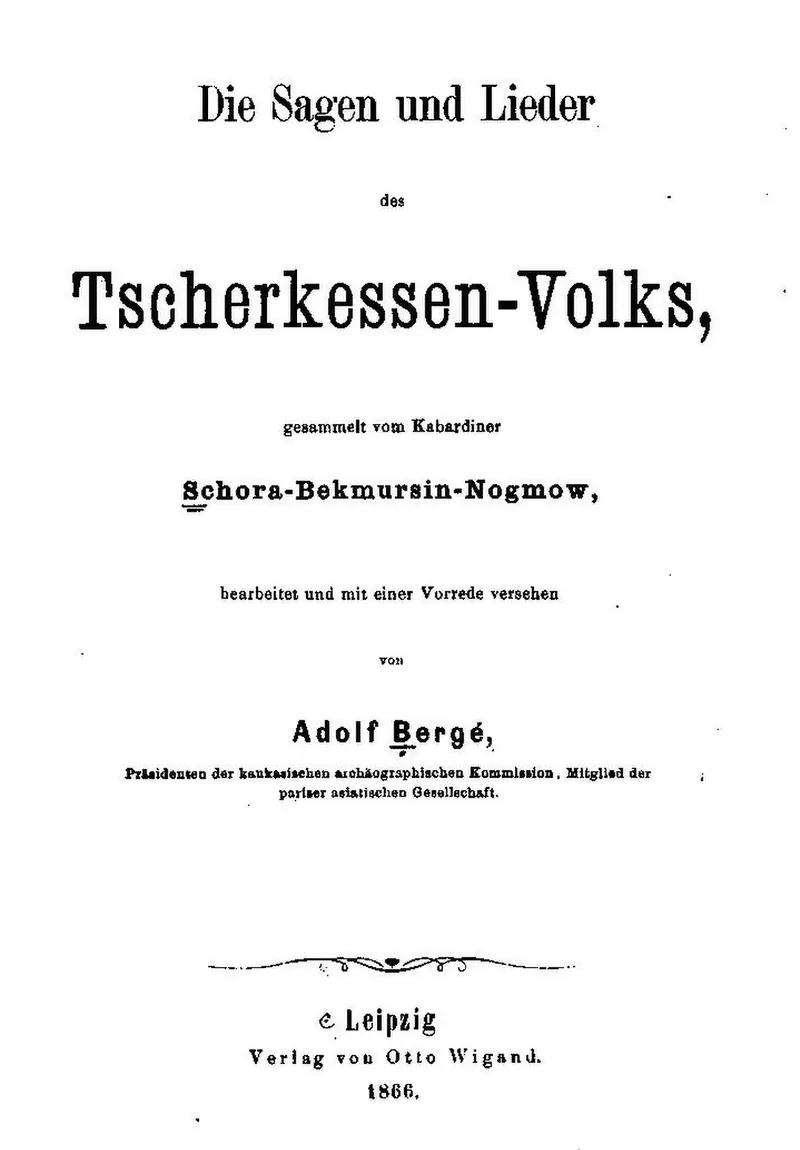
The German scholar Julius von Klaproth, who travelled in the Caucasus in the first decade of the 19th century, was the first Westerner to take note of the Nart stories. The earliest written account comes from Shora Nogmov (1794–1844), a Kabardian educator, philologist and poet, who wrote it in Russian between 1835 and 1843. It was published after his death, in 1861, and in German, edited by Adolf Berge, in 1866.
In 1865 the Kabardian writer Kazi Atazhukin published two excerpts of the folk poem about Sosruko in Tiflis; he is considered the greatest collector of the Kabardian epic. A century later the Adyghe Nart epic was published in Maykop in seven volumes (1968–1971), with more than 700 texts. Most of the Circassian texts that survive were recorded as songs, many of them with their own melody.
Prometheus, Demeter, King Arthur?
Readers often meet familiar figures in the Nart sagas. Sosruko stealing fire recalls Prometheus, and the Greek myth of Prometheus chained to a Caucasus mountain, Kazbek or Elbrus, resembles an episode of the sagas. Satanaya is compared with Demeter, Tlepsh with Hephaestus. The authors C. Scott Littleton and Linda A. Malcor have gone further and suggested, in From Scythia to Camelot, that parts of the King Arthur legends come from the Nart sagas; that idea remains a hypothesis.
Where to read the Nart sagas
In English, the standard collection of the Circassian tales is John Colarusso’s Nart Sagas from the Caucasus: Myths and Legends from the Circassians, Abazas, Abkhaz, and Ubykhs (Princeton University Press, 2002). The 1866 German edition of Nogmov’s work is free to read on the Internet Archive.
More Circassian culture: Habze, the Circassian code of conduct, Circassian boy names and the Ubykh language, in which parts of the Nart saga were also recorded.
Free on iPhone & Android
Circassian language and culture, in one app
Kabardian and Adyghe lessons, Habze culture lessons, a library of books, films and music, and Circassians from around the world to talk to.

4.9 on the App Store 50,000+ people in 100+ countries
Nart sagas: questions
What are the Nart sagas?
The heroic tales of the North Caucasus about the Narts, a race of heroes. Circassians, Abkhaz, Abaza, Ossetians, Karachays, Balkars, Chechens and Ingush all have their own versions, in prose and in song.
Who is Sosruko?
The central hero of many Nart cycles: the smallest of the Narts, strong and cunning, born from a stone. In the Circassian tales he and his mother Satanaya steal fire from a giant.
Who is Satanaya?
The mother of the Narts and their wise counsellor. In the Circassian and Abkhaz versions she stands for beauty, wisdom and unfading youth.
Are the Nart sagas Circassian or Ossetian?
Both, and more: they belong to many peoples of the Caucasus. Scholars disagree about their origins. The Ossetian versions keep an old Iranian core, while the Circassian and other Northwest Caucasian versions are valued for keeping older, rougher details.
Where can I read the Nart sagas in English?
John Colarusso’s Nart Sagas from the Caucasus (Princeton University Press, 2002) collects the tales of the Circassians, Abazas, Abkhaz and Ubykhs.
What does “Nart” mean?
Its origin is debated. The most common view connects it with an Iranian root meaning “man, hero”.
Sources
- Wikipedia (English), “Nart saga”. en.wikipedia.org/wiki/Nart_saga
- Wikipedia (English), “Sosruko”. en.wikipedia.org/wiki/Sosruko
- Wikipedia (English), “Satanaya”. en.wikipedia.org/wiki/Satanaya
- Wikipedia (English), “Tlepsh”. en.wikipedia.org/wiki/Tlepsh
- Wikipedia (English), “Shora Nogmov”. en.wikipedia.org/wiki/Shora_Nogmov
- Wikipedia (Russian), «Нартский эпос». ru.wikipedia.org/wiki/%D0%9D%D0%B0%D1%80%D1%82%D1%81%D0%BA%D0%B8%D0%B9
- Wikipedia (Russian), «Атажукин, Кази Мусабиевич». ru.wikipedia.org/wiki/%D0%90%D1%82%D0%B0%D0%B6%D1%83%D0%BA%D0%B8%D0%BD
- Wikipedia (Turkish), «Nart destanları». tr.wikipedia.org/wiki/Nart_destanlar%C4%B1
- John Colarusso, Nart Sagas from the Caucasus: Myths and Legends from the Circassians, Abazas, Abkhaz, and Ubykhs. Princeton University Press, 2002 (Open Library record). openlibrary.org/search?q=nart+sagas+from+the+caucasus+colarusso
- Die Sagen und Lieder des Tscherkessen-Volks (Leipzig, 1866), Internet Archive. archive.org/details/diesagenundlied00nogmgoog
Want more like this?
The app has 64 short lessons on Circassian culture and Habze, plus a course in Kabardian or Adyghe to learn the language behind them.
Download free50,000+ people in 100+ countries
