What Does Adyghe Mean?
Understanding the name the Circassian people call themselves.
If you have spent any time reading about Circassian culture, you have probably noticed two names being used: "Circassian" and "Adyghe." They often appear interchangeably, which can be confusing. So what is the difference? And what does "Adyghe" actually mean?
Adyghe: The Self-Name
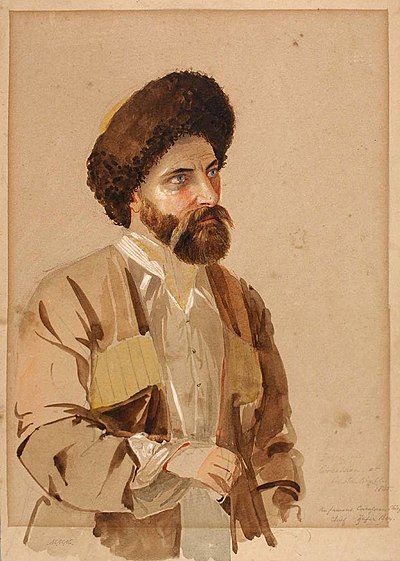
Adyghe (Адыгэ) is the name the Circassian people use for themselves in their own language. It is the indigenous term, the endonym, the word that Circassians have called themselves for thousands of years. Whether someone is Kabardian, Shapsug, Abzakh, Temirgoy, Besleney, Natukhai, Zhaney, or any of the other twelve traditional subgroups, they all identify as Adyghe. It is the unifying identity that transcends tribal divisions.
"Circassian" is the English-language exonym, the name outsiders gave to the Adyghe people. It likely derives from "Cherkess" (Черкес), the Russian and Turkish term for the same people. The origin of "Cherkess" is itself debated. Some scholars connect it to a Turkic word, others to a medieval Georgian or Greek term. Regardless of its origin, "Circassian" and "Cherkess" are external labels. While widely used in international contexts and accepted by many Circassians themselves (since their own languages do not use "Circassian"), the indigenous name is Adyghe.
The Etymology of Adyghe
The exact origin of the word "Adyghe" is debated among linguists and historians. Several theories exist, none universally accepted:
One popular folk etymology connects "Adyghe" to words meaning "children of the sun" or "people of the light." This interpretation is widespread in the diaspora and carries emotional resonance, though linguistic evidence is inconclusive. Another theory relates the word to the Black Sea coast, suggesting "people of the sea" or "coast people," which would align with the historical geography of the Circassian homeland in the Northwest Caucasus. Some scholars have proposed connections to ancient place names in the region.
What is clear is that the word is very old. References to peoples in the Northwest Caucasus by names that might be related to "Adyghe" appear in ancient and medieval sources, though the exact linguistic connections are uncertain. The word has been used continuously by the people themselves for at least many centuries, and likely much longer.
Adyghe vs. Circassian vs. Cherkess
All three terms refer to the same people. Adyghe (Адыгэ) is the native term. "Circassian" is the English term. "Cherkess" (Черкес) is the Russian and Turkish term. In academic and cultural contexts, "Adyghe" is increasingly preferred because it is the people's own word for themselves. International Circassian organizations often use both terms, writing "Circassian (Adyghe)" or "Adyghe/Circassian" to bridge the gap between internal and external naming.
Adding to the complexity, "Adyghe" sometimes refers specifically to the Western Circassian dialect and its speakers (those in Adygea, and historically in the western Caucasus coast), as opposed to Kabardian, the Eastern dialect. Context usually makes it clear whether someone is referring to the broader Adyghe nation (all Circassians) or the specific Adyghe dialect group (Western Circassians). This dual usage can be confusing but is well understood within the community. See Kabardian vs. Adyghe differences for more detail.
The Twelve Adyghe Tribes
The Adyghe nation historically consisted of twelve main tribal groups, each with its own territory, leaders, and subtle cultural variations. These included the Kabardians (the largest group, in the east), the Shapsug (on the Black Sea coast), the Abzakh (in the mountain valleys), the Temirgoy, the Besleney, the Natukhai, the Zhaney, the Khatukai, the Yegeruqai, the Mamkhegh, the Makhosh, and the Ubykh (a closely related but linguistically distinct group). The Circassian flag with its 12 stars represents these tribes. Despite their differences, all identified as Adyghe and shared the Habze ethical code, the Circassian language (in its various dialects), and a common cultural identity.
Adygaghe: Circassianness
Closely related to "Adyghe" is the concept of Адыгагъэ (Adygaghe), which roughly translates to "Circassianness" or "the quality of being Adyghe." It encompasses the full package of Circassian identity: language, Habze, cultural values, behavior, and worldview. It is not a passive identity (something you are born with) but an active one (something you must embody through how you live).
When Circassians talk about someone "having Adygaghe," they mean that person embodies the best of Circassian values: hospitality, respect for elders, dignity, courage, restraint, and cultural knowledge. It is the highest compliment in Adyghe culture. You cannot have Adygaghe without understanding Habze, and you cannot fully grasp Habze without understanding the Circassian language, because many of its core concepts have no precise equivalent in other languages.
Adygaghe also implies a responsibility. If you identify as Adyghe, you are expected to behave in ways that reflect well on the community. Your actions represent not just yourself but your family, your tribe, and your people. This sense of collective responsibility is a powerful force in Circassian communities and one of the reasons Adyghe identity has proven so resilient in the diaspora.
Adyghe in the Modern World
In the modern world, what it means to be Adyghe is evolving. For Circassians in the Caucasus, the identity is grounded in daily life, language use, and proximity to the homeland. For those in the diaspora, being Adyghe is often a more conscious choice, maintained through cultural activities, family traditions, community organizations, and personal study.
Social media has created new spaces for Adyghe identity. Young Circassians in Turkey, Jordan, Germany, and the United States connect with each other online, share music, discuss history, and explore what it means to be Adyghe in the 21st century. The conversation is ongoing: how do you maintain an ancient identity in a modern world? How much is Adygaghe about language versus values versus heritage? These questions have no single answer, but the fact that they are being asked by a new generation is itself a sign of cultural vitality.
Why Names Matter
Using the name "Adyghe" is an act of respect and recognition. It acknowledges the people's right to define themselves on their own terms, in their own language. For the Circassian diaspora, embracing the Adyghe identity is part of a broader movement to reconnect with heritage and preserve a culture at risk. Every time someone uses the word "Adyghe" instead of only "Circassian," they are honoring the indigenous voice of a people with one of the longest continuous cultural histories in Europe.
"To be Adyghe is not just about blood. It is about how you live."
Learning the Circassian language is perhaps the most meaningful way to connect with Adyghe identity. The language carries the sounds, concepts, and worldview that define what it means to be Adyghe. Every word learned is a step closer to understanding a culture that has endured for millennia.
Start Learning Circassian
2,000+ words, native speaker audio, Habze culture lessons, and a full alphabet course. Available in English, Russian, and Turkish.
Get the App