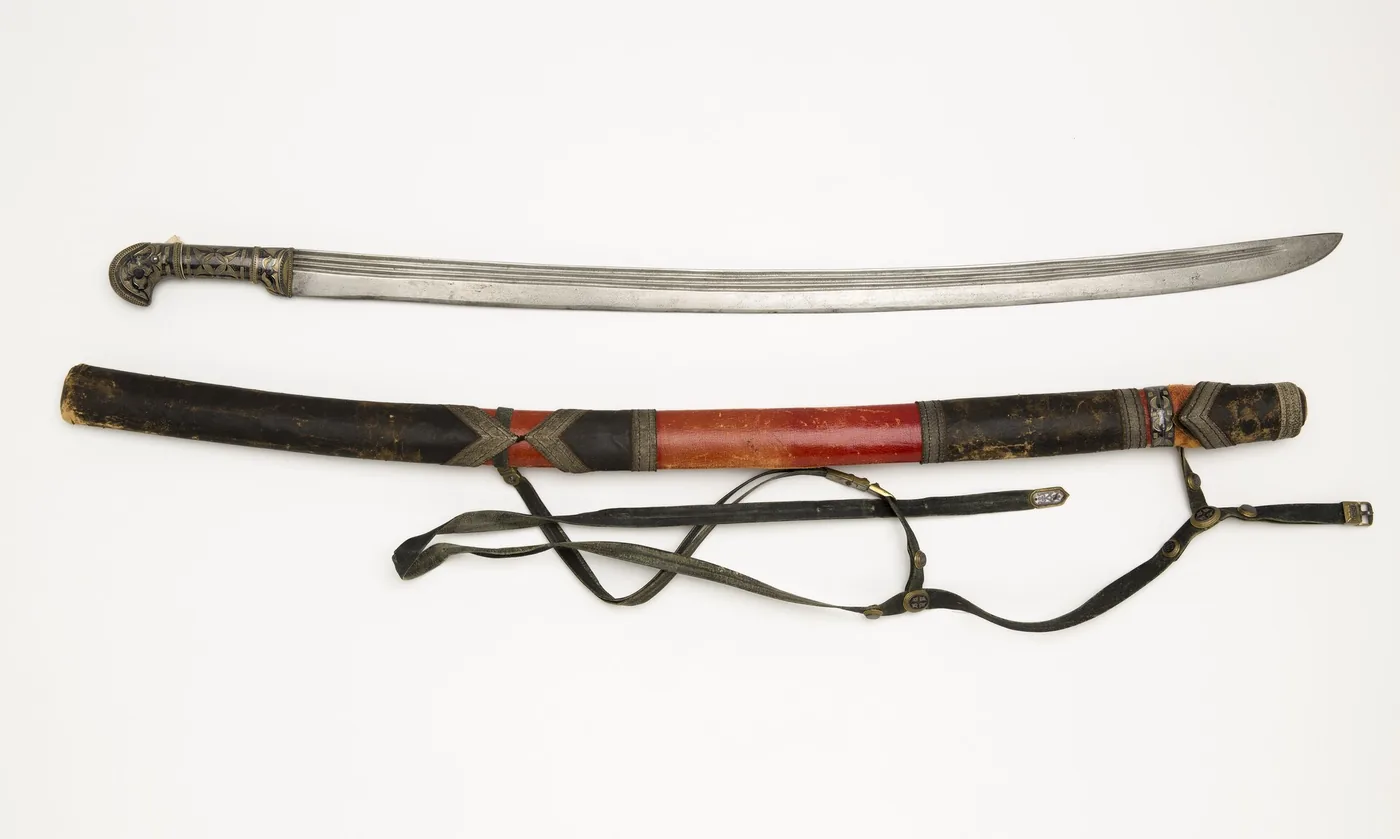
Two blades are part of the classic picture of a Circassian man in his cherkeska: the shashka, a long, gently curved sword, and the kama, a straight double-edged dagger. Both spread across the Caucasus, and the shashka went on to arm most of the Russian cavalry. Its very name comes from Circassian.
Here is what each weapon is, where the words come from, how the shashka left the Caucasus, and what the sword is called in Kabardian and Adyghe.
What is a shashka?
The shashka is a single-edged, one-handed sword with no guard. Its curve is gentle, which puts it halfway between a sharply curved sabre and a straight sword, so it can both cut and thrust. Most were 80 to 105 centimetres long, with a blade of 65 to 86 centimetres.
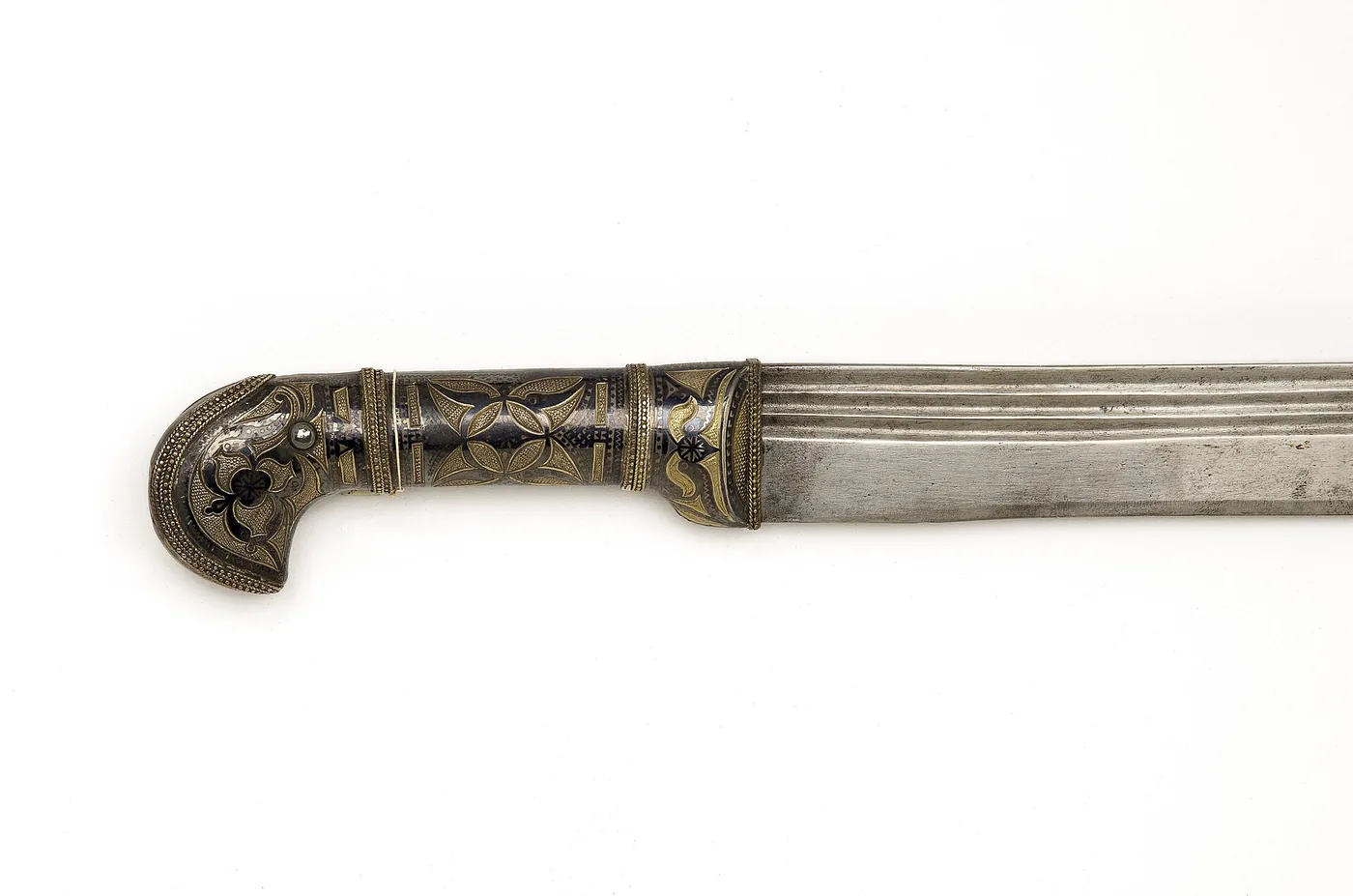
Two details give a Caucasian shashka away. It was worn edge up, and its scabbard swallowed most of the hilt, leaving only the hooked pommel, split into two little “ears”, sticking out. Plain ones had horn hilts; the finest were covered in silver with black niello inlay, like the one in the picture at the top of this page.
A Circassian word: “long knife”
The word shashka comes from the Circassian сэшхуэ, “long knife”. You can take it apart with words from the Circassian app’s lessons: сэ is “knife” in Kabardian, and -шхуэ is the ending that makes things big, the same one that turns унагъуэ (family) into унагъуэшхуэ, a big family. A big knife, a long knife.
The everyday word for sword in the lessons is different: джатэ in Kabardian and чатэ in Adyghe.
From the Caucasus to the Russian cavalry
The shashka grew up among the mountain peoples of the Caucasus. Its earliest known depictions are in early 17th-century wall paintings in western Georgia, the oldest shashka that can be dated was made in 1713, and the word itself first turns up in writing in 1747.
Russian troops met the sword in the Caucasus in the 19th century and preferred it to the sabres they were issued. The first Russian military pattern followed in 1834, and over the 19th century the shashka gradually replaced the sabre in all cavalry units except the hussars.
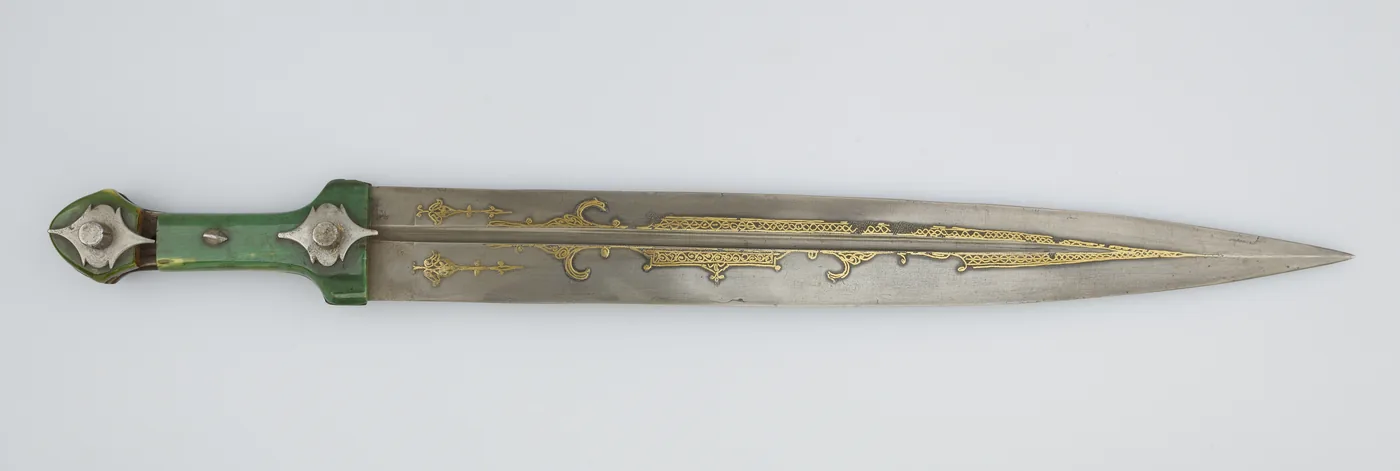
The kama: the Circassian dagger
The kama (also written qama) is a straight, double-edged dagger whose shape recalls the Roman gladius and the Scottish dirk. In Circassia and Ossetia it was called kama; in Adyghe the word is къамэ. Russian calls the same weapon a kinzhal.
The Kabardian linguist Shagirov traced the word kama to the Turkic languages, where Turkish kama simply means “dagger”. By the middle of the 19th century almost everyone in most of the Caucasus carried one. Scabbards were often worked in silver or gold, and the dagger also had a place in dance.
More about the dress these blades were worn with is in the guide to Circassian clothing, and about the men who carried them in the Circassian warrior tradition.
Sword, knife and warrior in Kabardian and Adyghe
All of these come from the Circassian app’s lessons. The cherkeska, the long coat worn with the shashka and kama, is цей in Kabardian.
| English | Kabardian | Adyghe |
|---|---|---|
| sword | джатэdzhate | чатэchate |
| knife | сэse | шъэжъыйshezhhəy |
| warrior | зауэлIzawel' | заолIzaol' |
| strong sword | Джатэ лъэщDzhate leshch | – |
| I am a warrior | Сэ зауэлIщSe zawel'shch | – |
| white cherkeska | Цей хужьTsey khuzh' | – |
Duel with a shashka: the Habze Duel
The Circassian app has a game built around the shashka. In the Habze Duel (version 5.2), you and a rival take turns, with 24 hours for each move. Every turn opens with a question about Habze, the Circassian code of conduct. Answer right and fast and your blade is steady; answer wrong and it shakes. Then you aim at your rival and strike.
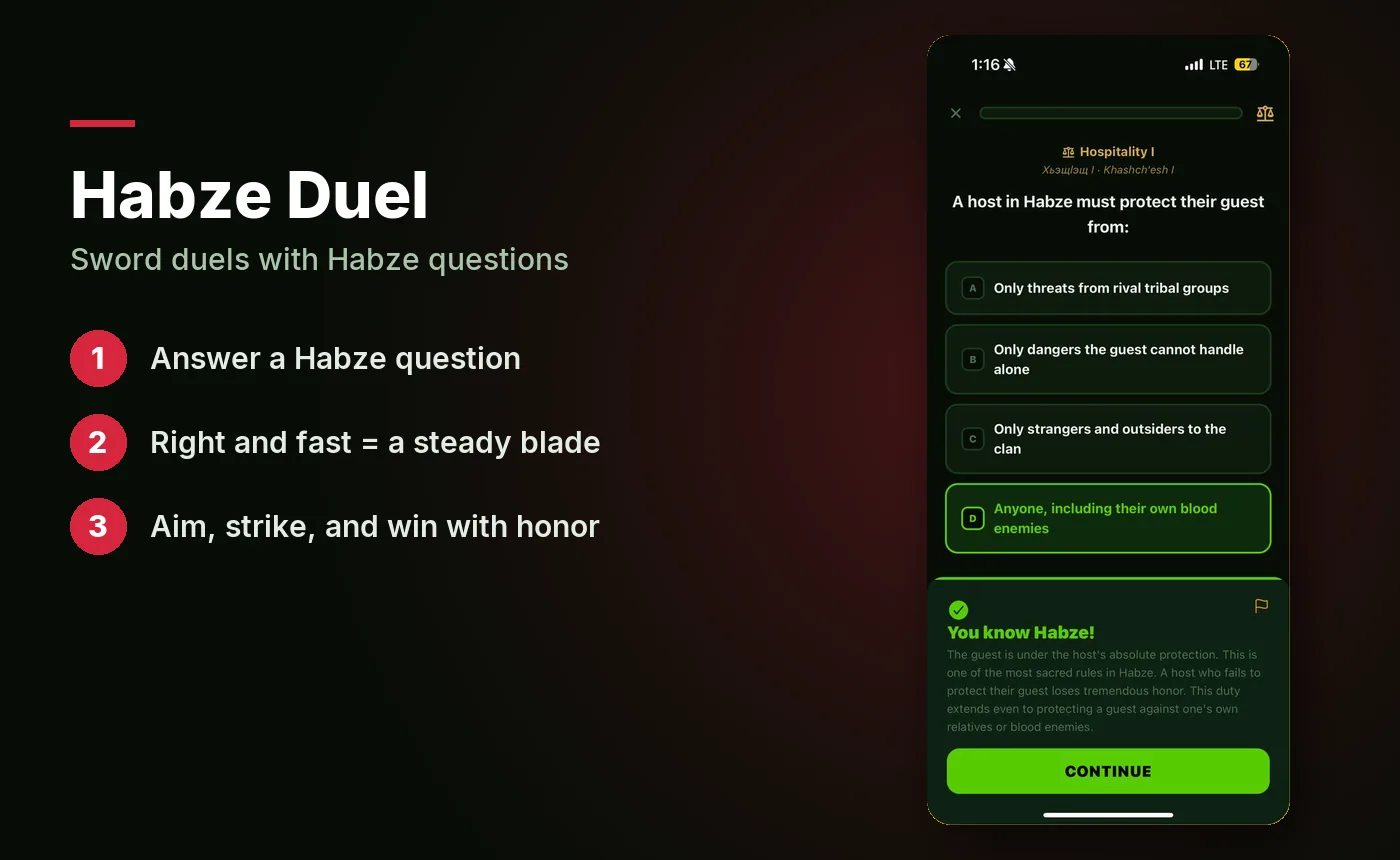
The ending is the best part: a strike to the neck, which only a correct answer can land, ends the duel, and then you choose between Honor and No mercy. Sparing your rival is the Habze choice, and it earns you honor points. You don’t need to speak Circassian to play; the questions come in English, Russian or Turkish. All five games are in the best Circassian games.
Free on iPhone & Android
Duel with a shashka
Download the Circassian app and challenge a friend to a Habze Duel. Win with the right answer, then choose honor.

4.9 on the App Store 40,000+ people in 100+ countries
Shashka and kama: frequently asked questions
What is a Circassian shashka?
A single-edged, one-handed Caucasian sword with a gentle curve and no guard, good for both cutting and thrusting. It was worn edge up, with most of the hilt inside the scabbard.
Where does the word shashka come from?
From the Circassian сэшхуэ, “long knife”. In Kabardian, сэ means knife and the ending -шхуэ makes it big.
What is a Circassian kama?
A straight, double-edged dagger. It was called kama in Circassia and Ossetia; the Adyghe word is къамэ, and Russian calls it a kinzhal.
Is kama a Turkish word?
The Kabardian linguist Shagirov traced the name to the Turkic languages; in Turkish, kama means dagger.
Did the Russian army use the shashka?
Yes. Russian troops adopted it after meeting it in the Caucasus. The first military pattern came in 1834, and in the 19th century it replaced the sabre in all cavalry except the hussars.
How do you say sword in Circassian?
Sword is джатэ in Kabardian and чатэ in Adyghe. Knife is сэ in Kabardian and шъэжъый in Adyghe.
Sources
- Wikipedia, “Shashka” (history, construction, etymology) and “Khanjali” (the kama, and Shagirov on the name).
- Livrustkammaren (Royal Armoury, Stockholm), Circassian shashka and scabbard, 1829, inv. LRK 7125–7126, via Wikimedia Commons.
- National Museum in Kraków, Circassian kama, 1750–1850, inv. MNK V-1140, via Wikimedia Commons.
- Circassian app, Kabardian and Adyghe lessons (sword, knife, warrior, cherkeska) and the Habze Duel, version 5.2 (September 2026).
Play all five, free
Habze Duel, Archery Duel, Horse Race, Word Search and Word Rain. Every game practices what you learn in the app, from Kabardian or Adyghe words to Habze.
Download free40,000+ people in 100+ countries
